Chair Pennington called the meeting to order and led the Pledge of Allegiance, followed by a moment of silence to honor men and women serving at home and abroad.
Chair Pennington announced several agenda modifications: Consent Item 7G was amended to replace an unsigned contract with a signed one; Consent Item 7Q was amended to reduce anticipated capital spending from $300,000 to $157,000; Item 8E (construction of two buildings at the Fairgrounds) was deleted; and Item 8F (consideration of adjustment to the capital improvement program) was moved to the October 5, 2026 regular meeting.
Chair Pennington announced that the landfill situation was addressed in the workshop that day and the board reached consensus to direct legal counsel to file an appeal on behalf of the county.
She also noted that the City of Bunnell was holding a meeting at 7 p.m. where residents could speak out against the landfill, and stated the board would be moving directly to the budget public hearing before returning to proclamations.
No separate recognitions item was discussed; the transcript does not show a standalone recognitions segment distinct from the proclamations.
Four proclamations were read and approved by the board.
Commissioner Dance read a proclamation designating September 2026 as Childhood Cancer Awareness Month, honoring the nonprofit Live Like Cameron.
Commissioner Richardson read a proclamation recognizing September 17–23, 2026 as Constitution Week, presented by the Old Kings Highway Chapter of the Daughters of the American Revolution.
Commissioner Hansen read a proclamation recognizing September 18, 2026 as POW/MIA Recognition Day, presented by the Flagler County Veterans Advisory Council.
Chair Pennington read a proclamation designating October 4, 2026 as a Day of Remembrance for Jorge and Nancy Selenas and dedicating the county's transparency web page in their memory.
Commissioner Carney read a proclamation recognizing October 2, 2026 as Manufacturing Day and October 2026 as Manufacturing Month in Flagler County, citing 95 private manufacturing establishments and noting the role of the Volusia Manufacturers Association.
Kelly Celigga, vice chair of the VMA, accepted the proclamation and expressed appreciation for the county's recognition of manufacturing's importance.
Public comment opened with multiple residents speaking on a range of topics.
Several speakers addressed the previously approved cell tower near the Hunter's Ridge/Ormond Beach residential community at 2730 Airport Road, urging the board to reconsider the 3-2 vote approving it.
Additional speakers raised concerns about 'Project Butterfly,' a Class 1 solid waste treatment facility proposed near farmland and residences west of Bunnell.
One speaker again appealed for a new location for the Bikeman of Flagler County nonprofit bike shop.
Chair Pennington clarified that the cell tower vote could no longer be reconsidered by the board and that affected owners would need to appeal to circuit court.
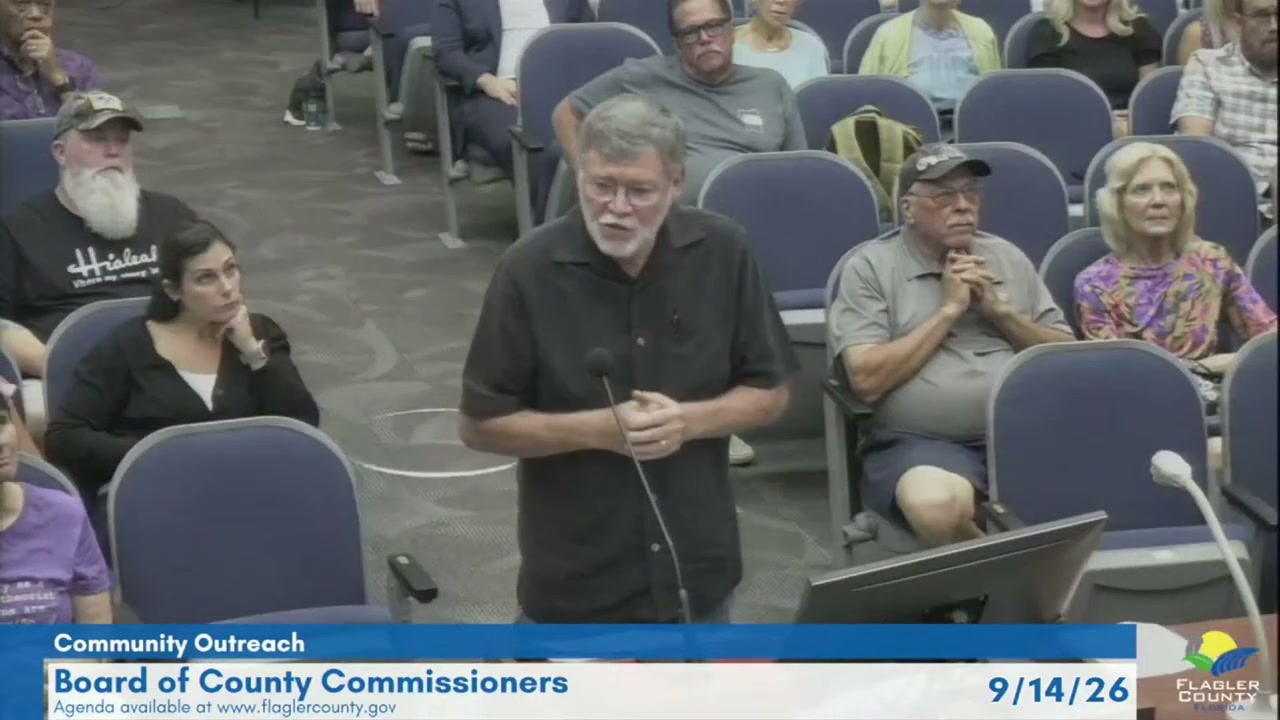
A speaker addressed the board on cell towers generally and the previously approved tower at Airport Road specifically, arguing that criteria 2, 3, 5, and 6 of the county's special use guidelines were not met and warning that the proliferation of storage-unit co-located towers would only grow.
The speaker also called for a moratorium on new cell tower applications — similar to the board's recent data center moratorium — until the comprehensive plan is updated to address telecommunications infrastructure.
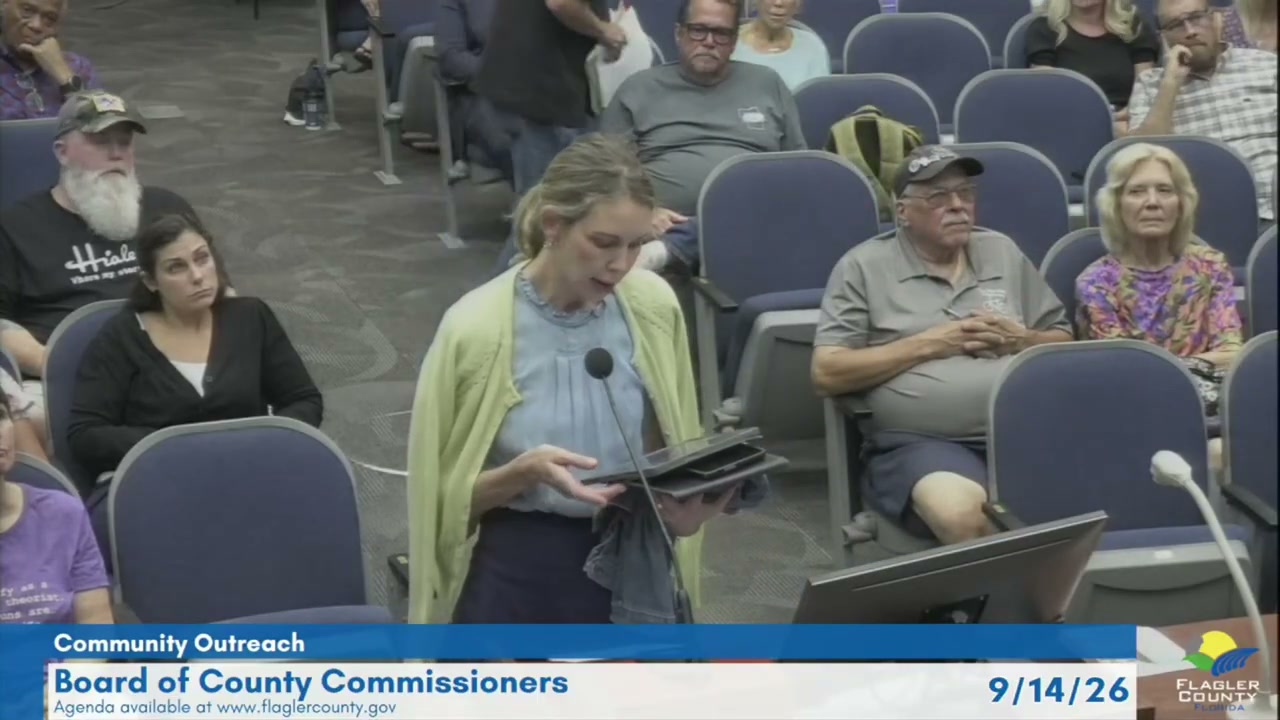
A speaker thanked Commissioners Carney and Dance for voting against the Airport Road tower and strongly urged the three commissioners who voted in favor to reconsider, citing property value impacts on over 600 petition-signing neighbors and the residential — not industrial — character of the Hunter's Ridge area.
The speaker stated emails with photographic evidence had been sent and no responses received.
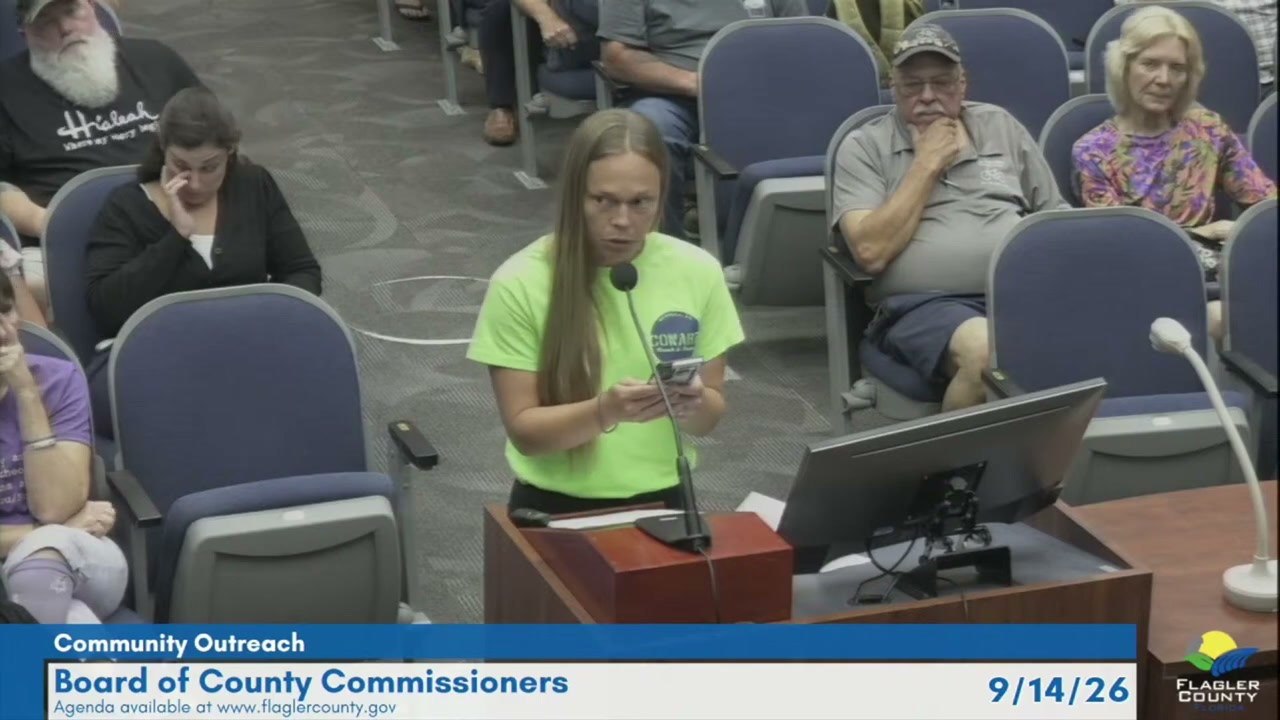
A speaker opposed 'Project Butterfly,' a proposed Class 1 solid waste treatment facility less than a half-mile from the site and nearby farmland.
The speaker thanked Commissioners Pennington and Dance for opposing the City of Bunnell's approval and urged the county to continue its appeal, warning of contamination risks to wells, farmland, water, and health for thousands of area residents.
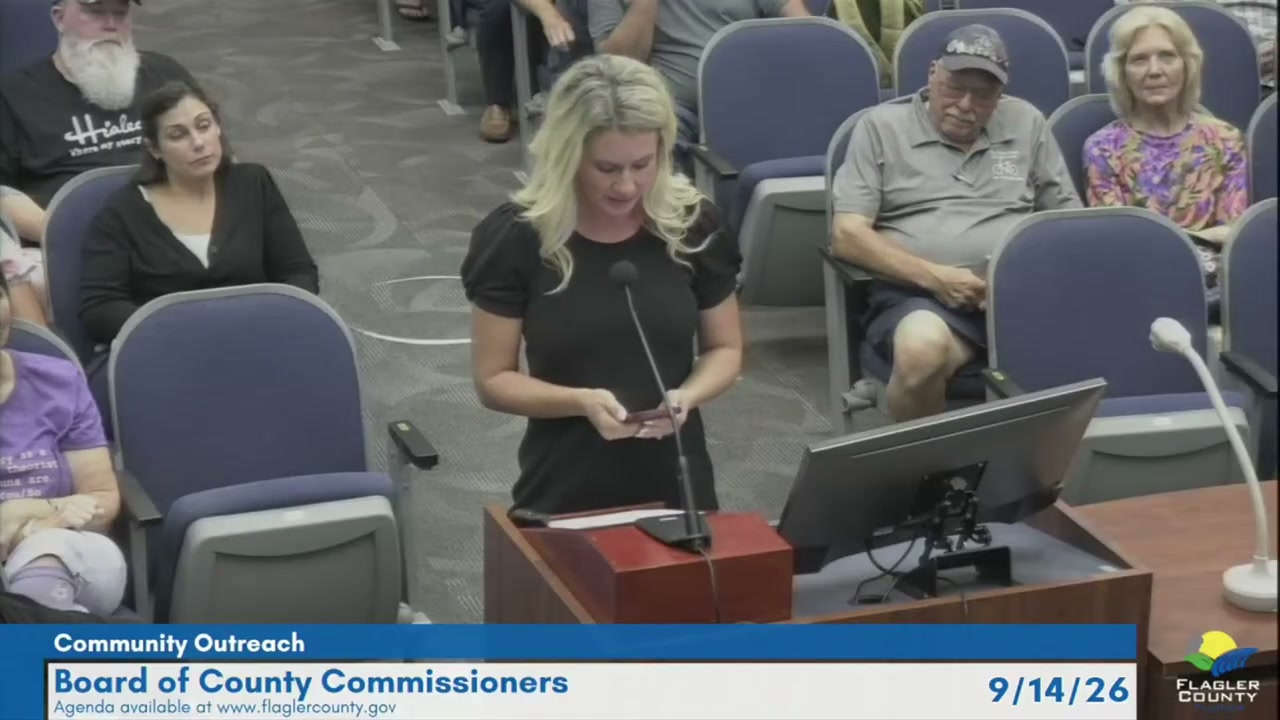
A speaker asked the commission to place reconsideration of the Airport Road cell tower vote (Items 9A and 9B from the August 17 meeting) on a future agenda, arguing the 3-2 vote reflects legitimate unresolved concerns about whether the specific location is the best available and whether Verizon provided sufficient engineering evidence that existing structures cannot accommodate its antennas.
A speaker appealed to the board to find Bikeman of Flagler County a permanent location, stating that despite a board-appointed point person there has been no response and that the organization has enlisted legal counsel regarding a deed restriction on a potential site.
The charity has repaired tens of thousands of bicycles at no cost to residents since 2014 and is now in dire need of a facility.
A speaker asked the commission to reconsider or formally place on the agenda reconsideration of the Airport Road cell tower vote, noting the site is less than 500 feet from nearby homes.
The speaker argued professional realtors have confirmed the monopole will directly and negatively affect home values and asked at minimum that the county attorney review the transcript, vote record, and ex parte disclosures before the approvals are finalized.
A speaker thanked the board for the consensus reached in the afternoon workshop to appeal the City of Bunnell's decision on the Project Butterfly landfill permit.
The speaker invited commissioners to a community meeting at Split Oak Ranch, noted that the 'Citizens to Protect Rural Flagler' Facebook group had grown to nearly 900 members in nine days, and provided an overview of community organizing efforts.
A speaker echoed thanks to Commissioners Carney and Dance for opposing the Airport Road cell tower and asked the other three commissioners to reconsider their votes, arguing it is a residential — not industrial — area and the tower will harm property values and constitute an eyesore for families spending time outdoors.
A speaker called for the board to investigate the possibility of dissolving the City of Bunnell municipality, citing a pattern of annexation decisions and development approvals that harm unincorporated county residents.
The speaker argued a city should not be able to make decisions with direct impacts on unincorporated areas and expressed support for whatever the board can do to stop the landfill project.
The board asked whether any consent items should be pulled; Consent Item 7I (Flagler County Humane Society contract renewal) was pulled for separate action.
Following discussion that the existing contract expires October 1 and no short-term extension authority exists in the contract, the board voted to remove 7I from consent, table it to the October 5 meeting under general business, and authorize the administrator to extend the current contract for 30 days.
Approved on consent agenda without separate discussion.
Approved on consent agenda without separate discussion.
Approved on consent agenda without separate discussion.
Approved on consent agenda without separate discussion.
Approved on consent agenda without separate discussion.
Approved on consent agenda without separate discussion.
Approved on consent agenda without separate discussion.
Approved on consent agenda without separate discussion.
Approved on consent agenda without separate discussion.
Approved on consent agenda as amended (unsigned contract replaced with signed contract) without separate discussion.
Approved on consent agenda without separate discussion.
This item — renewal of the Flagler County Humane Society contract — was pulled from consent after the board discussed concerns raised during the day's workshop.
Because the existing contract expires October 1 and the standard contract language does not allow the administrator to execute a short-term extension, the board voted to table the item to the October 5 meeting under general business and to separately authorize the administrator to extend the current contract for 30 days to bridge the gap.
Approved on consent agenda without separate discussion.
Approved on consent agenda without separate discussion.
Approved on consent agenda without separate discussion.
Approved on consent agenda without separate discussion.
Approved on consent agenda without separate discussion.
Approved on consent agenda without separate discussion.
Approved on consent agenda without separate discussion.
Approved on consent agenda as amended (attachments replaced to reduce anticipated capital spending from $300,000 to $157,000) without separate discussion.
Fire Chief presented a proposal for a Nuisance Fire Alarm Reduction Program, noting that false alarm responses have grown roughly 13% over three years to approximately 410 annually at an estimated taxpayer cost of $184,000 per year, while also taking apparatus out of service for about 307 hours.
The proposed program would involve a 12-month phased rollout — six months of pure education followed by notification-only enforcement — with fees beginning in month 13, and would apply to unincorporated county areas, Bunnell, Marineland, and Beverly Beach.
Board members raised concerns about mandating county-wide registration of all alarm holders, the risk that fees might incentivize owners to disconnect systems, the feasibility of enforcement, and whether the program should focus first on known repeat locations such as Hammock Beach Resort.
The board reached a consensus to have commissioners individually meet with the chief to refine the parameters before bringing back a formal ordinance, rather than moving to implementation tonight.
A speaker described from personal experience how humidity and multiple-manufacturer smoke detector systems can cause false alarms in residential settings, and offered support for the nuisance alarm program.
Drawing on experience with a fire department, the speaker validated that fines do change building management behavior.
A speaker testified in support of the fire chief's proposal, describing how large commercial buildings often hire under-qualified technicians who bypass problem components rather than fixing them.
The Denver model — $1,000 for a second false alarm within a year and $5,000 for a third — was cited as a proven approach that has reduced false alarms.
Tourism Director Amy Lucasic and tournament director Adam Renfro presented a request for a $50,000 reimbursable sponsorship from tourist development tax funds to help cover spectator shuttle costs for the inaugural Constellation Furyk & Friends PGA Champions Golf Tournament, scheduled October 5–11 at Hammock Beach Golf Resort.
The event, run by the Jim and Tabitha Furyk Foundation, projects approximately 20,000 attendees over three public days, 1,500 hotel room nights, national Golf Channel broadcast coverage in 170 countries, and $100,000 in charitable commitments to 13 Flagler County organizations.
Emergency management director Jonathan Lord described six-to-eight months of multi-agency public safety planning, and noted tournament organizers will reimburse approximately $90,000 in public safety costs.
The board approved the sponsorship after brief public comment in support.
A speaker expressed support for the PGA tournament sponsorship, offering VFW parking facilities and other Kings Road 501(c)(3) organizations as potential overflow parking partners and suggesting that additional parking capacity will be needed beyond what has been planned at Daytona State College.
Staff presented the upcoming expiration (November 14, 2026) of the facility use agreement with SMA Healthcare for the Flagler Access Center on Moody Boulevard in Bunnell, which provides mental health and substance abuse screenings, Baker Act transportation, and related services at no cost to users in exchange for free use of the county-owned building.
SMA representatives described significant growth in services — from 3,100 clients in FY2023-24 to nearly 4,000 in FY2025-26, including a tripling of juvenile clients — and affirmed their desire to remain.
Commissioner Dance raised questions about the county's cost of utilities and the overall county investment, noting a $170,000 annual county contribution in addition to the free building and a $10 million new facility.
The board reached consensus to continue the relationship but directed staff to come back with a revised agreement that asks SMA to contribute toward utility costs (water, sewer, and electric) rather than having the county cover them entirely.
County Health and Human Services Director Joe Hegus presented the results of an RFP process for a private operator to take over the David I.
Siegel Adult Day Care Center, noting three proposals were received and Therapeutic Assisted Living — a small six-resident ALF run by owner Latasha Ralph — scored highest.
Staff noted the transition would require state licensing approval and roughly 60–90 days, that the county would provide space at no charge in year one with minimal rent thereafter, and that unlike the current county model the new operator would not have a full-time RN on staff.
Several board members expressed discomfort with insufficient detail — particularly around dementia/Alzheimer care protocols, medication management, and whether the operator could reach the break-even threshold of 16 clients — and asked to visit the facility before deciding.
The board voted to table the item to October 5.
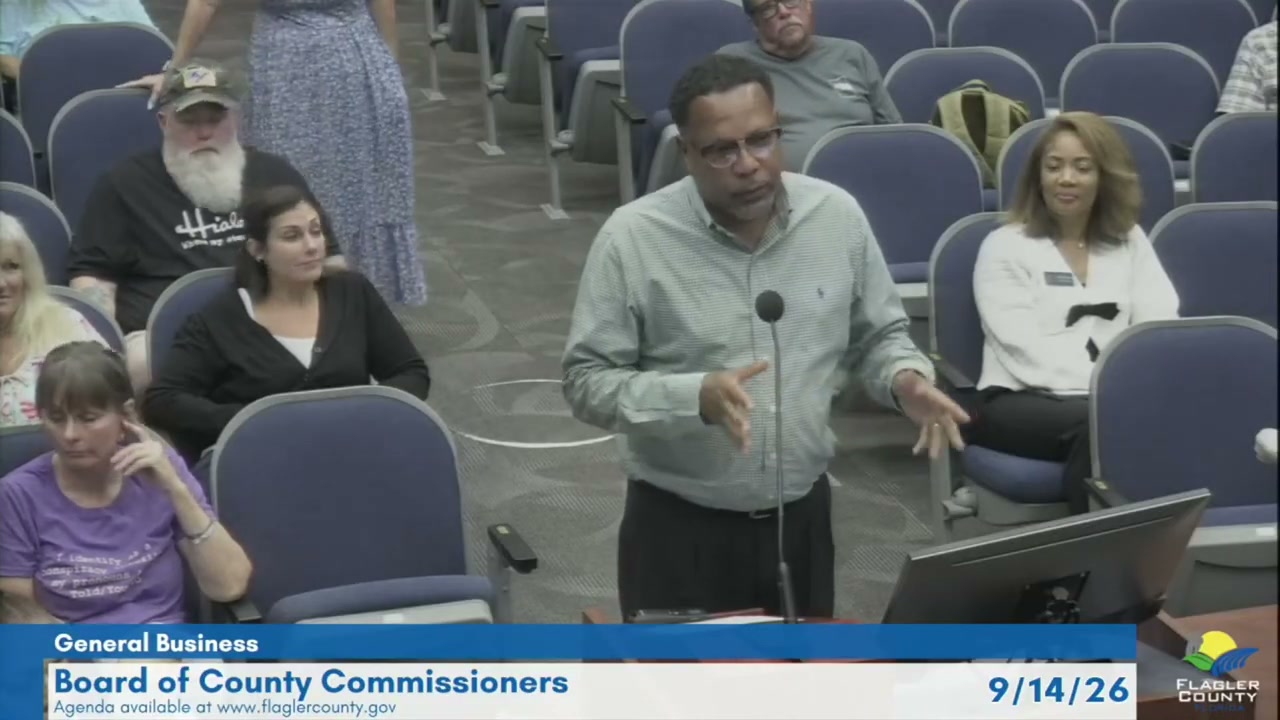
A speaker testified about the unmet community need for adult daycare, describing families who are forced into full-time long-term care placements simply because they cannot find a daytime program for a loved one while they work.
The speaker characterized the proposed initiative as a meaningful solution for families who need eight-to-ten hours of daily supervised care, drawing on experience managing Grand Oaks skilled nursing facility in Palm Coast.
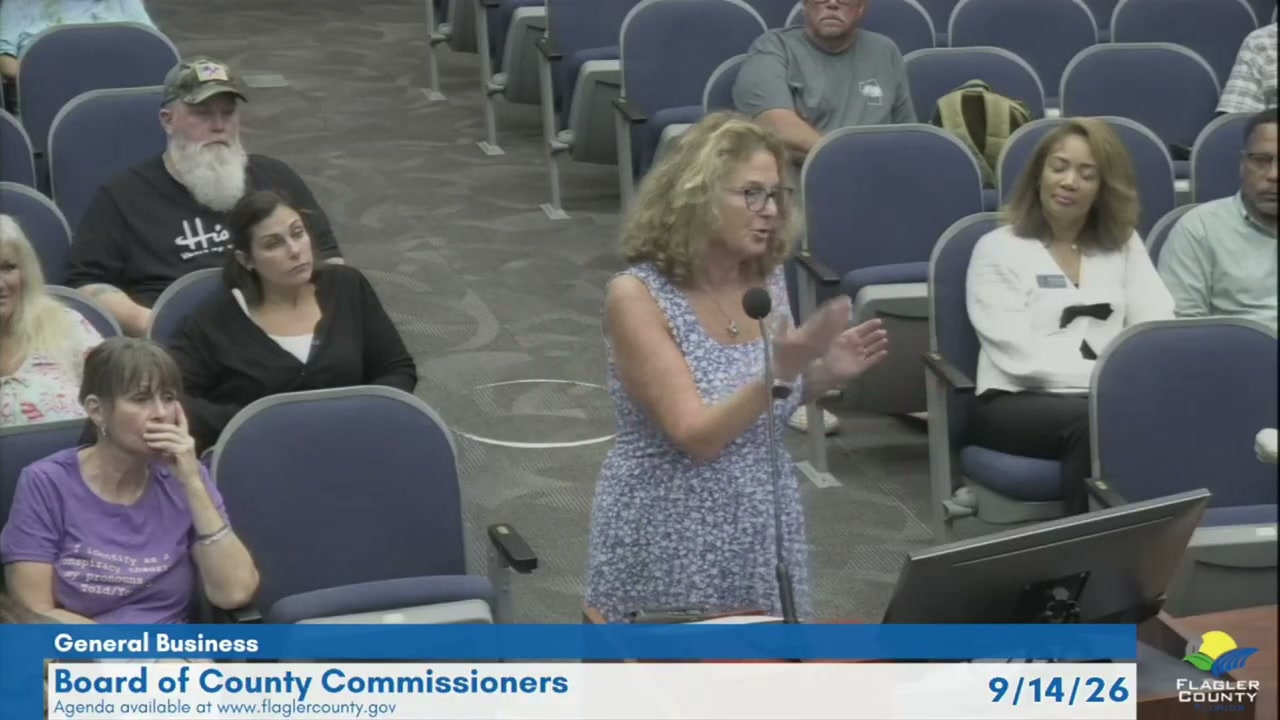
A speaker raised safety questions about the proposed lower level of medical staffing — specifically the absence of a full-time nurse — for a population that includes Alzheimer's and dementia patients.
Risks outlined included medication administration, appropriate staff-to-client ratios, wandering prevention, and the sundowning phenomenon that typically begins at 5 p.m., with a call for the board to ensure adequate safeguards before approving any transition.
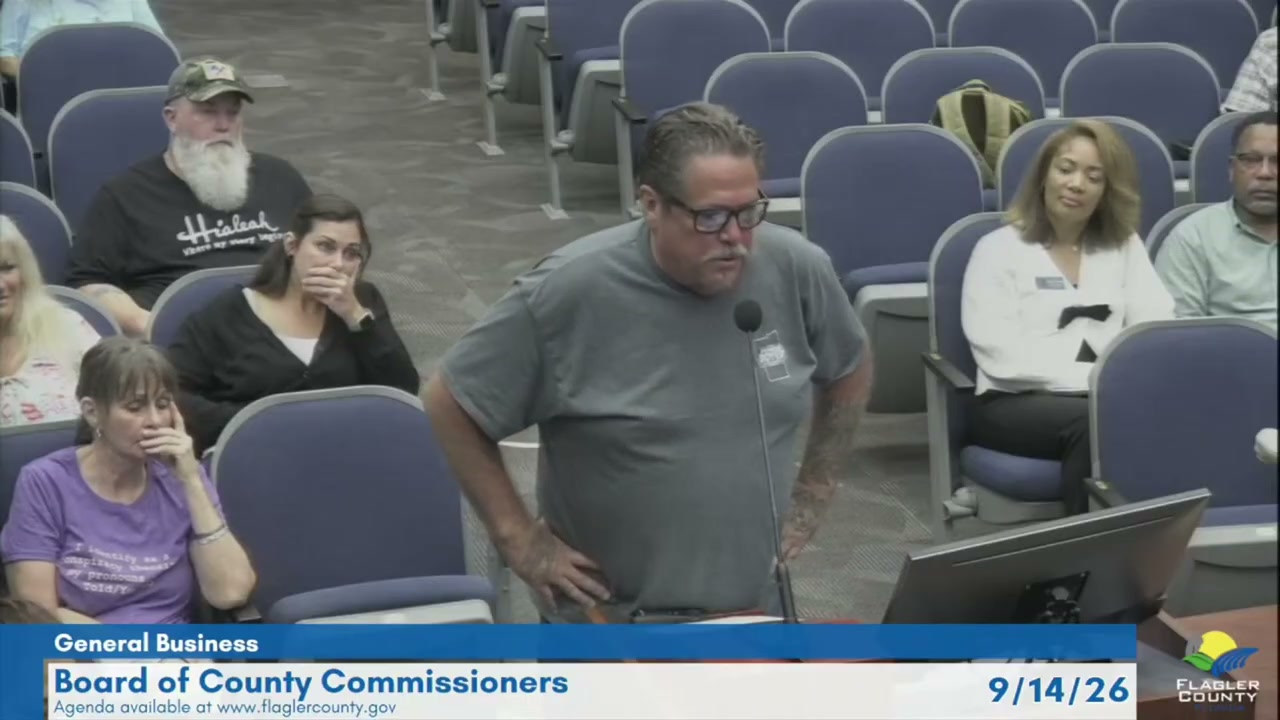
A speaker raised concerns that the county should not pay for the new operator's employees or operational costs, and that if the facility requires capital improvements such as a new roof before the operator moves in, those costs should be disclosed publicly.
The speaker also recommended including a lease clause allowing the county to exit the agreement if state violations occur, noting the current county program had never received a state violation.
This item was deleted from the agenda prior to the meeting as announced under agenda modifications (Item 2.a) and was not discussed.
This item was moved to the October 5, 2026 regular meeting prior to the meeting as announced under agenda modifications (Item 2.a) and was not discussed.
Interim Financial Services Director Brian Ekinger opened the second and final TRIM public hearing for FY2026-27, announcing that the aggregate operating millage rate of 7.9737 mills is 0.93% below the rolled-back rate and 0.1102 mills lower than the FY26 rate of 8.1800 mills, with a total millage of 8.0698 mills when including debt service.
The total final budget of $333,288,593 is identical to the tentative budget adopted at the September 3 hearing, with no adjustments.
No citizens came forward for public comment during any of the three motions — adopting the final millage rates (Resolution 2026-52), adopting the final budget (Resolution 2026-53), and authorizing the administrator to execute ministerial documents — all of which were approved unanimously.
This quasi-judicial hearing concerned a special use request by Gulfstream Towers for a 150-foot monopole telecommunications tower (camouflaged as a pine tree) on a 20-acre parcel at 2512 Orange Street in the Daytona North subdivision, with T-Mobile as the anchor tenant.
Planner Simone Kenny presented staff findings that the tower meets all eight special sighting criteria, including the 300-foot residential setback, and that no towers exist within the required two-mile search radius; the Planning and Development Board had recommended denial 6-1 citing criteria 3 (nature of adjacent residential uses) and 8 (availability of suitable structures).
The applicant's attorney argued the tower meets all code criteria, including state preemption on health/RF concerns, and that the 20-acre heavily wooded parcel is essentially the only feasible site within the coverage objective area.
Multiple nearby residents urged denial, citing property value impacts, the residential character of the neighborhood, and lack of notice.
After discussion, Commissioner Dance moved to deny based on criteria 3 — that the tower is incompatible with the entirely residential character of the surrounding area — and the motion carried 5-0 on a roll call vote.
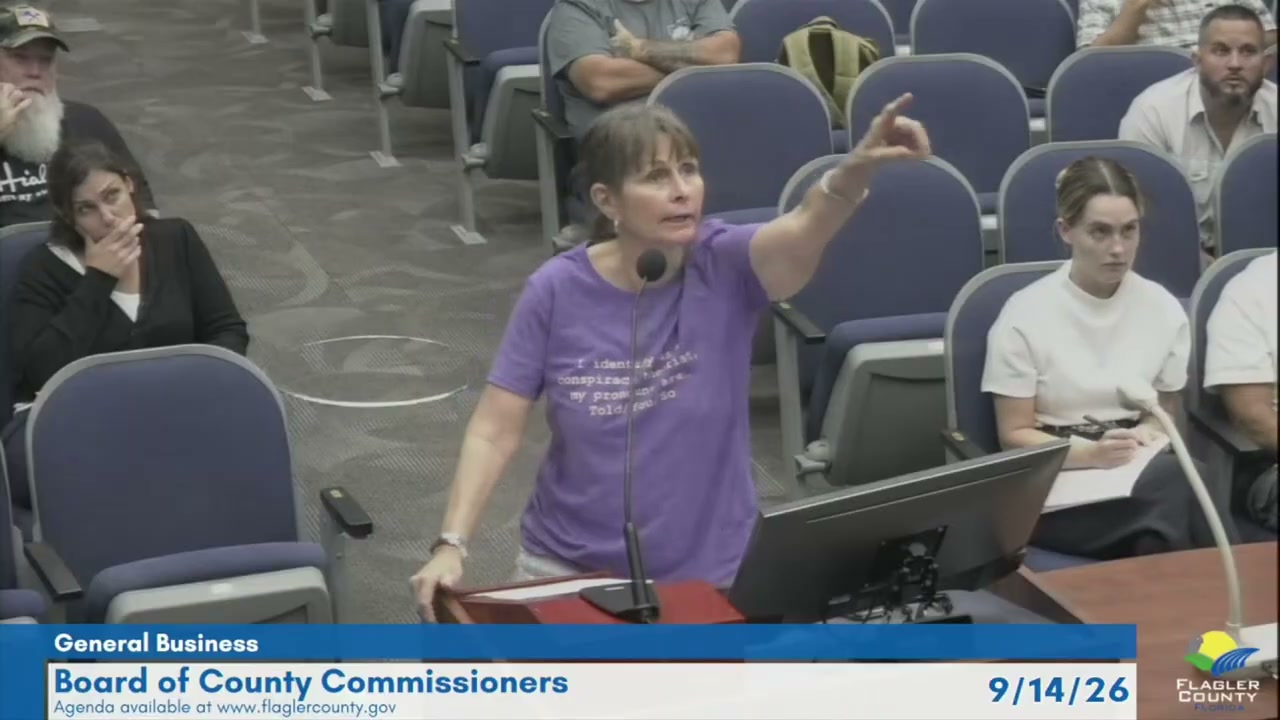
A speaker addressed the coverage maps presented by the applicant for the proposed Orange Street tower, stating the coverage footprint does not serve the immediate area and that the speaker already relies on Starlink.
Two parcels of county-owned land nearby — including land the county recently acquired — were identified as potentially better locations, with a note that Dead Lake has no cell coverage and is visited by bass tournament participants and restaurant patrons.
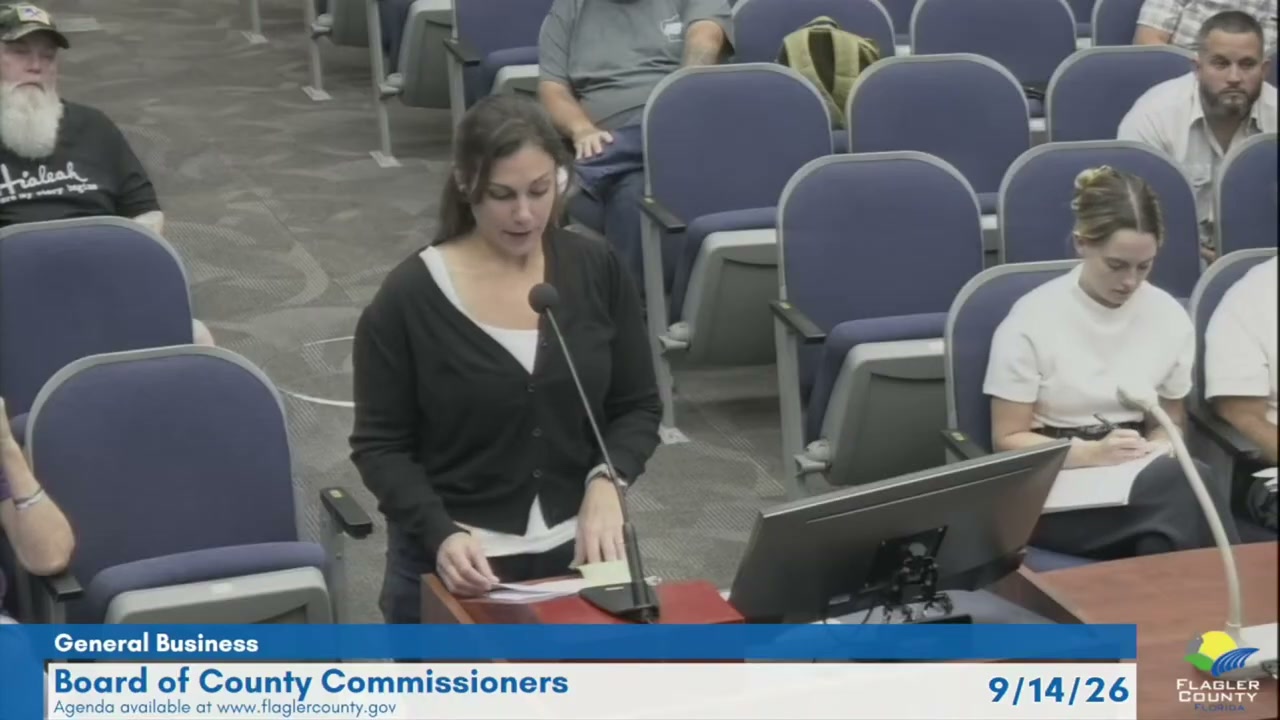
A speaker asked the board to uphold the Planning and Development Board's 6-1 denial recommendation for the Orange Street tower, arguing that meeting the minimum 300-foot setback does not automatically mean a special use is appropriate.
The speaker contended the applicant failed to demonstrate with engineering evidence that towers outside the two-mile radius are unsuitable, and that documentation of outreach to alternative properties should be required before finalizing approvals.
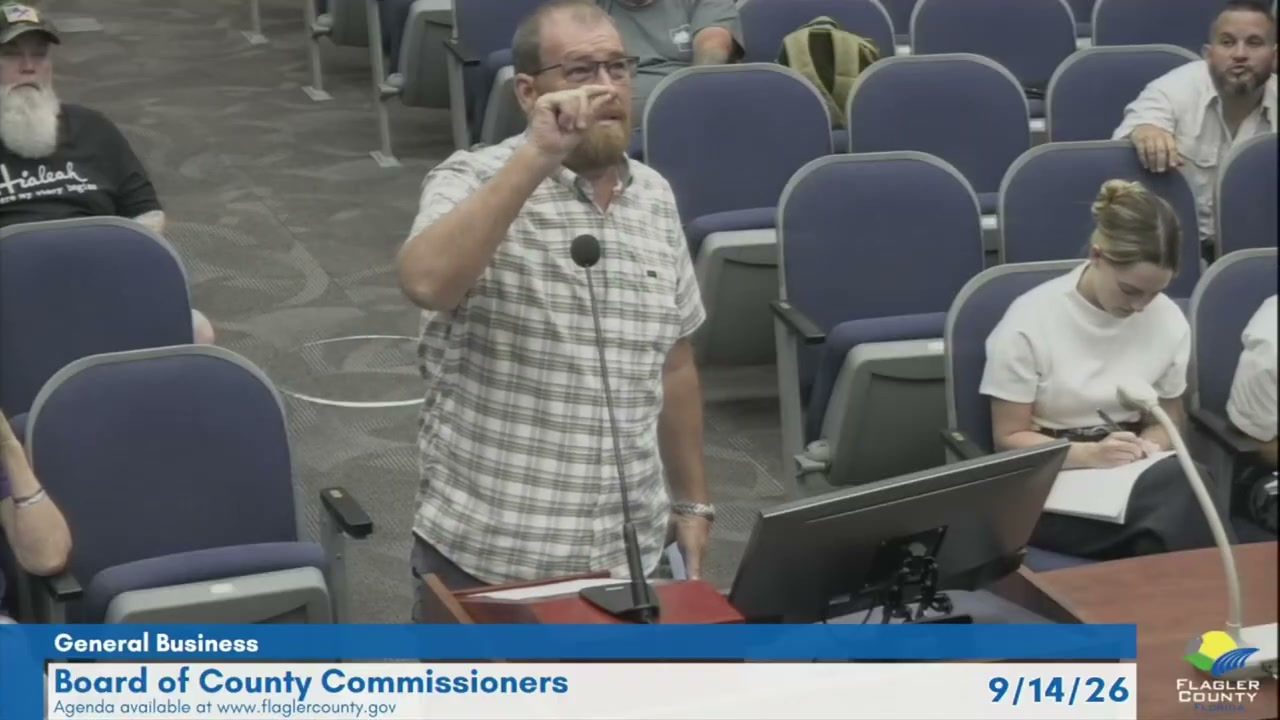
A speaker questioned why a tower located within three miles to the southeast — which appears as only a small green dot — is not represented more prominently in T-Mobile's coverage maps, suggesting the applicant may have downplayed the coverage provided by nearby existing infrastructure.
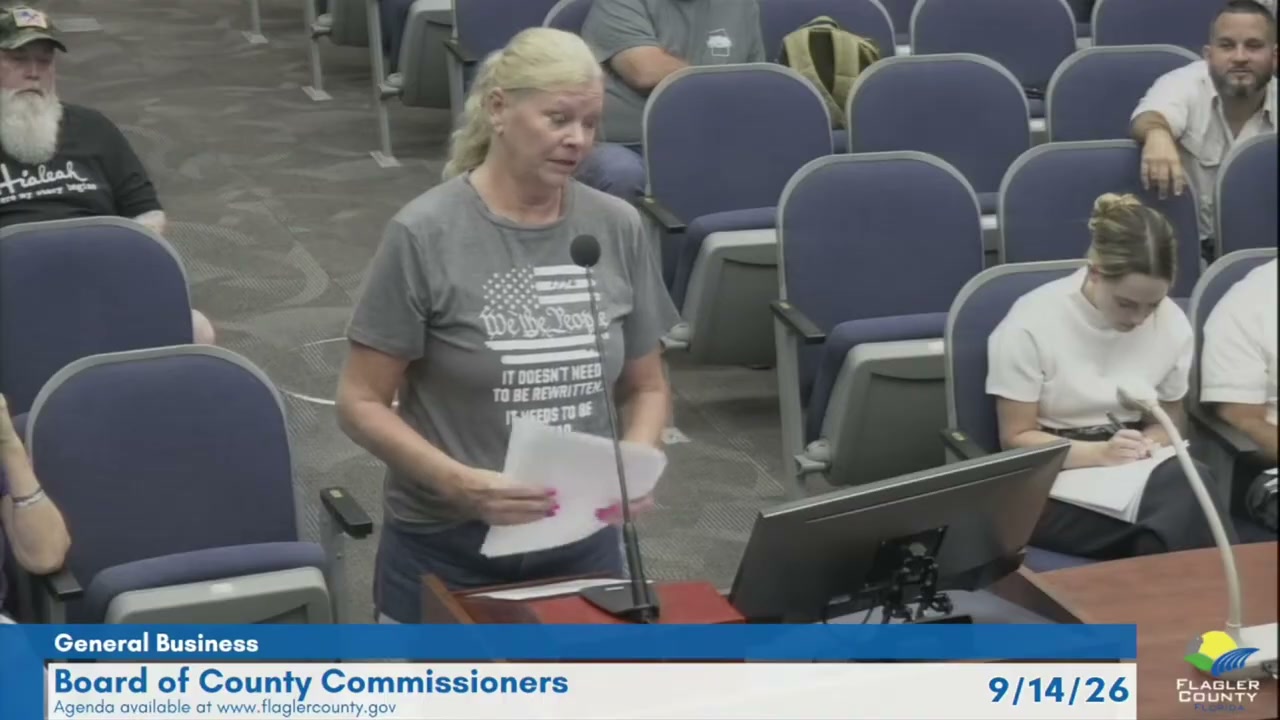
A speaker objected to the adequacy of a 300-foot setback for a 200-foot structure close to family homes and cited environmental concerns about bees, gopher tortoises, and wildlife on both sides of the road.
The speaker also alleged that a representative of the tower developer had contacted neighbors with what was characterized as a threatening voicemail offering to explain 'their options' and 'yours,' and argued that many neighbors lack adequate T-Mobile service specifically but have found other solutions.
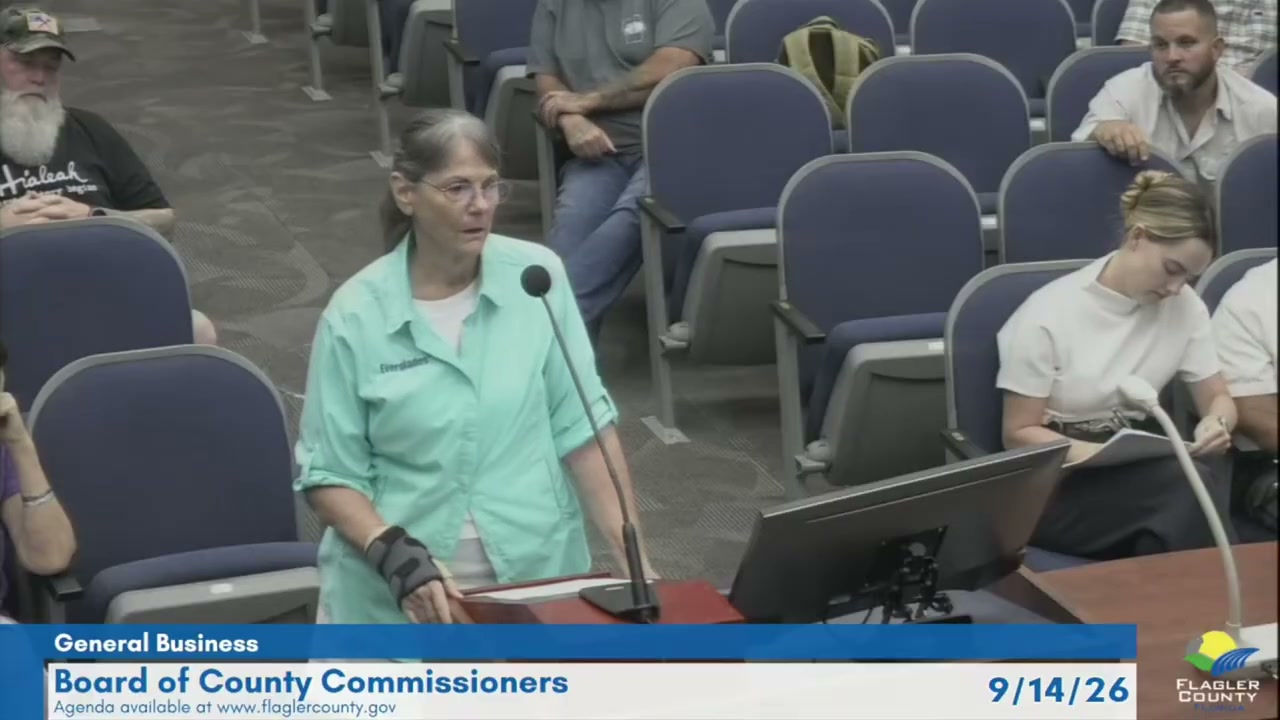
A speaker stated that good cell service exists in the area and that multiple service providers work there, with inexpensive satellite alternatives also available.
The tower was characterized as unnecessary for the residential community, and denial was urged.
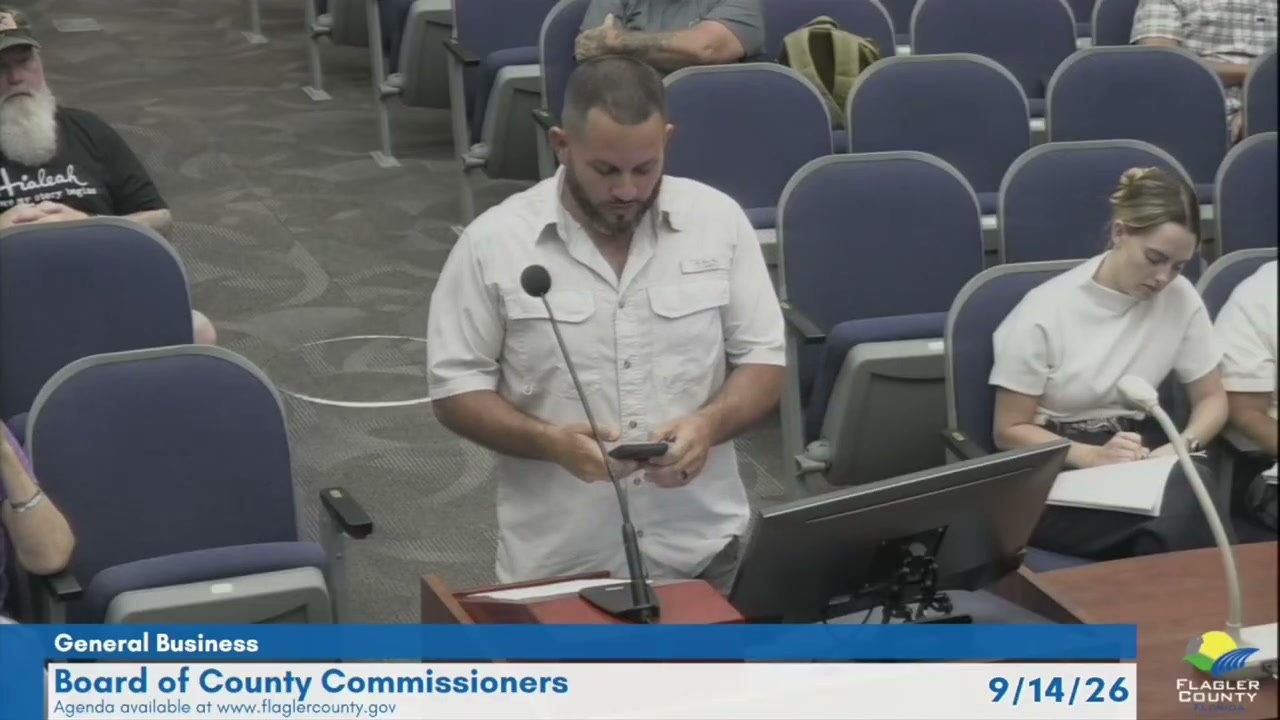
A speaker expressed disappointment that most neighborhood residents were not notified and learned about the application only through neighbors distributing copies.
The speaker stated having moved to the rural west side specifically to escape city infrastructure and that the cell tower, combined with the already-looming landfill threat, represents an unacceptable cumulative burden on families raising children in the area.
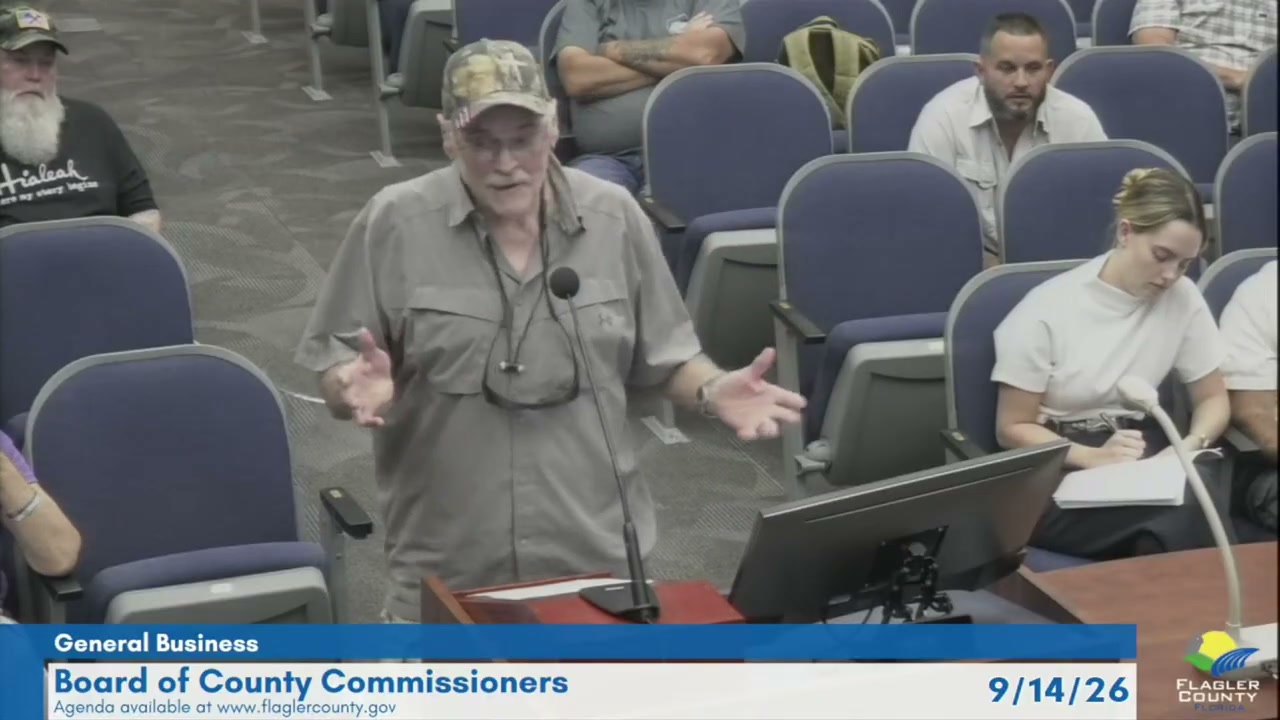
A speaker raised the irony that health concerns are legally barred from consideration while public health reasons are used to justify tower placement for 911 and emergency services access.
The speaker suggested moving the tower to Hidden Trails Park at a greater height to cover the area, and urged the board to include a condition preventing the 20-acre property from later being subdivided.
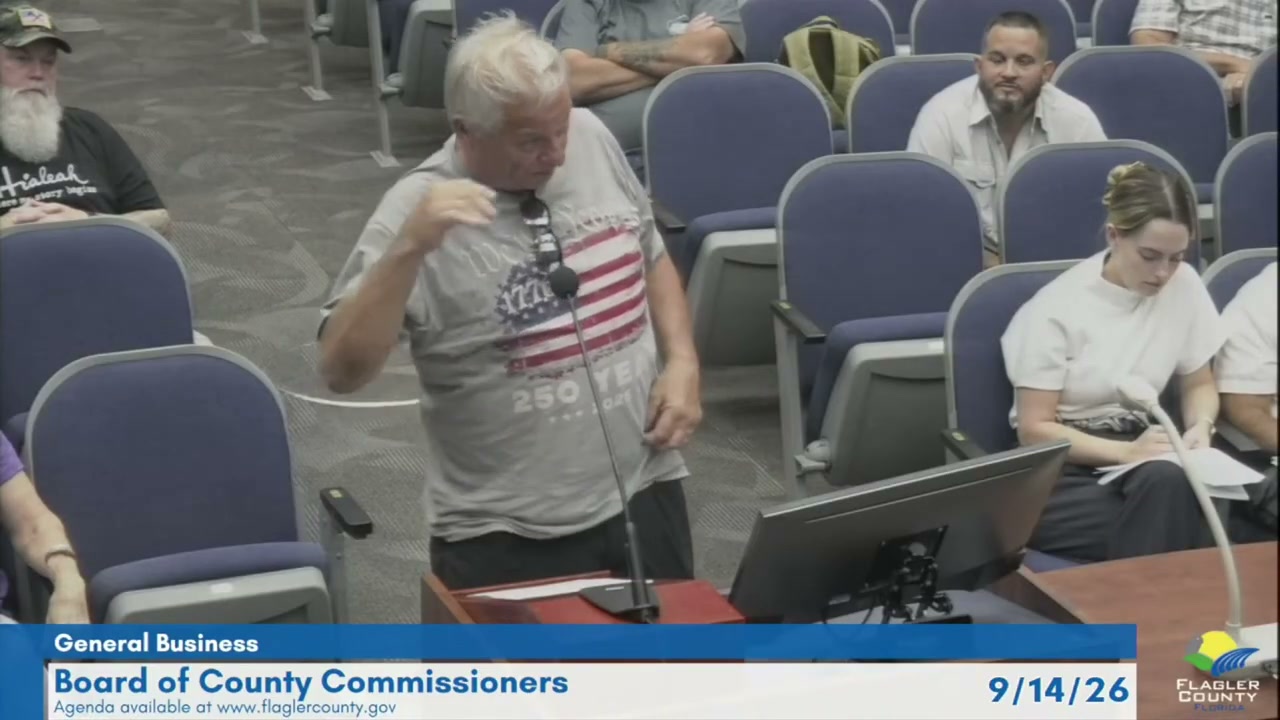
A speaker stated having found four property owners in the area who would accept the tower away from houses, and argued that because Verizon and other carriers already provide coverage in the area, T-Mobile's need is primarily about data-center connectivity rather than residential service.
The speaker noted Spectrum works in the area and that T-Mobile is 'at the bottom of the list' in local service quality.
This was the second reading (adoption hearing) of a large-scale Future Land Use Map amendment to change approximately 119 acres on Seminole Woods Boulevard from Agriculture/Timberlands and Commercial Low Intensity to Mixed Use High Intensity/Medium-High Density, accompanied by a parcel-specific limiting policy capping residential density at 7 units per acre and non-residential development at a 0.2 FAR (reduced from the category maximum of 0.4 in response to state agency comments).
No state agency objections that could form the basis of a legal challenge were received.
Extensive public comment from Grand Landings and Seminole Woods residents raised concerns about traffic on Seminole Woods Boulevard, water and sewer capacity under Palm Coast's consent order, compatibility with surrounding single-family neighborhoods, and the open-ended development timeline.
Commissioner Hansen moved to approve; Commissioner Carney seconded; the motion carried 4-1 with Commissioner Dance voting no.
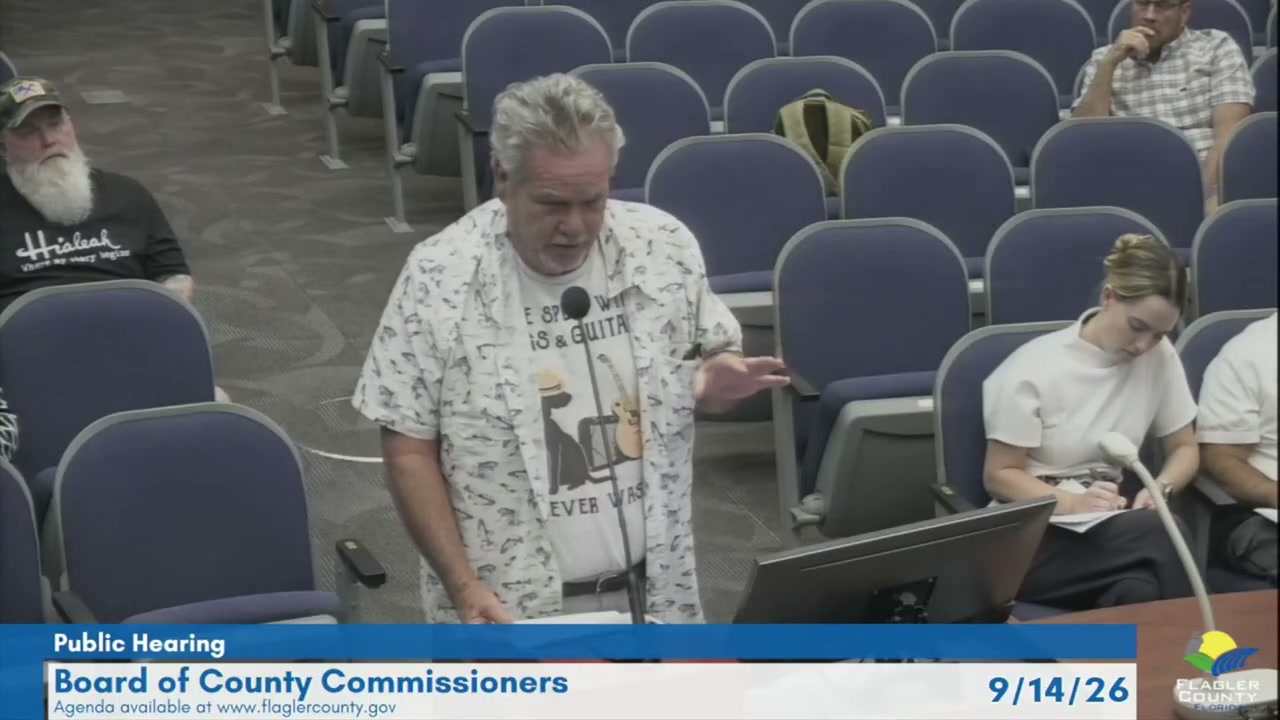
A speaker challenged the applicant's viewshed exhibit for using an outdated aerial that omits hundreds of recently built homes in the community.
The speaker read from the PUD development agreement's duration clause, which states the entitlement shall not expire based solely on passage of time and requires no commencement or completion schedule, arguing this gives the developer perpetual unchecked rights with no accountability to the board or residents.
A speaker described the layers of existing development along Seminole Woods — the U section, S section, Grand Landings, Seminole Palms with over 1,000 homes, Seminole Trace — and argued the cumulative traffic, water supply, and sewer capacity impacts across all these projects must be evaluated together rather than individually.
A written list of specific community questions about infrastructure concurrency and compatibility was submitted.
A speaker acknowledged development is inevitable but argued the specific mix of high-density apartments, commercial space, and townhomes proposed — on top of 431 units already under construction plus 92 recently approved homes across the street — will push Seminole Woods Road far beyond its two-lane capacity.
The speaker argued the developer should be required to pay for road expansion, school capacity mitigation, and infrastructure rather than shifting those costs to county taxpayers.
A speaker stated that area neighbors are not opposed to single-family development but object to the mixed-use designation, specifically to commercial and apartment uses.
The speaker also questioned the absence of a traffic report at this stage, contrasting the requirements imposed on small individual projects with the lack of a detailed traffic study for this large mixed-use development.
A speaker cited specific Flagler County Comprehensive Plan policies — including FLU1.2.20 (compatibility), FLU1.2.27 (protecting existing neighborhoods from incompatible encroachment), and IE1.1.27 (urban densities only where central utilities exist at adopted levels of service) — arguing the application fails consistency review.
The speaker also challenged the adequacy of a 'service availability' letter as proof of Palm Coast water/sewer capacity, noting Palm Coast is under a consent order and the word 'capacity' does not appear in the letter.
A speaker drew parallels to the Veranda Bay development process eight years earlier, cautioning that viewshed buffers and landscaping commitments frequently fail to deliver adequate screening in practice.
The proposed screen buffers were described as insufficient, with small plantings unable to provide meaningful protection for damaged or inadequate vegetative buffers.
A speaker connected themes of developer priorities, stress on utilities and infrastructure, and residents' interests to this specific application.
The board was urged to table the item pending traffic studies, confirmed water and sewer capacity, and school mitigation agreements before approving a large mixed-use project on Seminole Woods Road.
This was the second reading of the companion rezoning ordinance for the same 119-acre Seminole Woods parcel, changing it from Agriculture to a Mixed Use PUD.
During the break, the applicant negotiated several amendments to the PUD agreement in response to board concerns: the viewshed protection zone was increased from 25 feet to 40 feet; an 80% opacity standard (at three years' growth, maintained by the POA) was added; a prohibition on commercial uses within the northern viewshed buffer was incorporated into the concept plan; and the PUD entitlement period was set at 10 years with an option to petition the board for an extension rather than running in perpetuity.
After public comment largely reiterating concerns from Item 9C, Commissioner Hansen moved to approve with those stipulations; Commissioner Carney seconded; the motion carried 4-1 with Commissioner Dance voting no.
A speaker reiterated concerns about the adequacy of the proposed viewshed, arguing that multi-story apartment buildings will simply tower over any tree buffer and cannot be meaningfully screened.
The speaker quoted Commissioner Carney's own campaign statements about compatible growth and controlled development to argue that approving this high-density mixed-use project contradicts what the commissioner ran on.
A speaker reiterated that viewshed protection is illusory — a small pond with 25-foot trees cannot screen 30-to-50-foot buildings.
The speaker argued the PUD agreement's flexibility clause means the developer can build anything, anywhere on the property with no obligation to return for amendments, and called for a performance bond to ensure the opacity commitment is actually delivered.
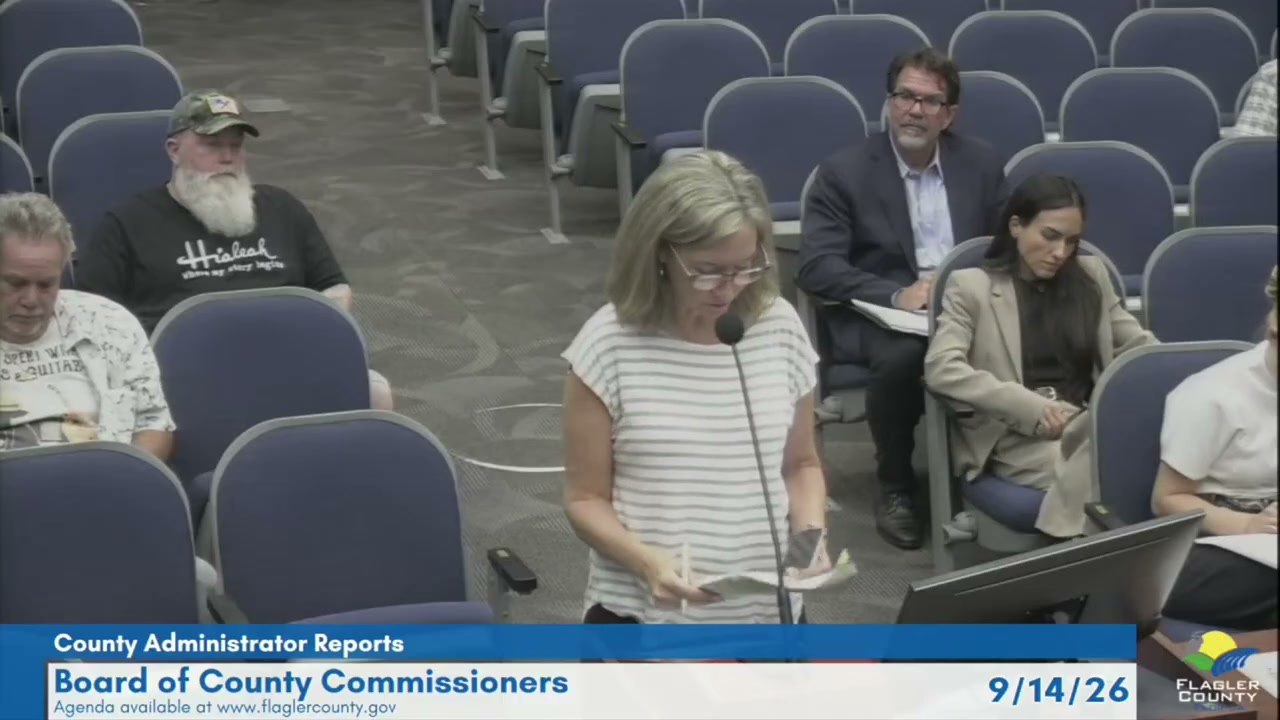
A speaker described the proceeding as a 'dog and pony show' and urged the board not to approve the PUD without fully resolving questions about the flexibility clause, lack of binding commercial placement restrictions, and the developer's ability to return repeatedly to change commitments — as occurred four times with the Lake View Estates development.
The speaker asked whether commercial tenants would need board approval and whether road widening costs would fall to taxpayers or the developer.
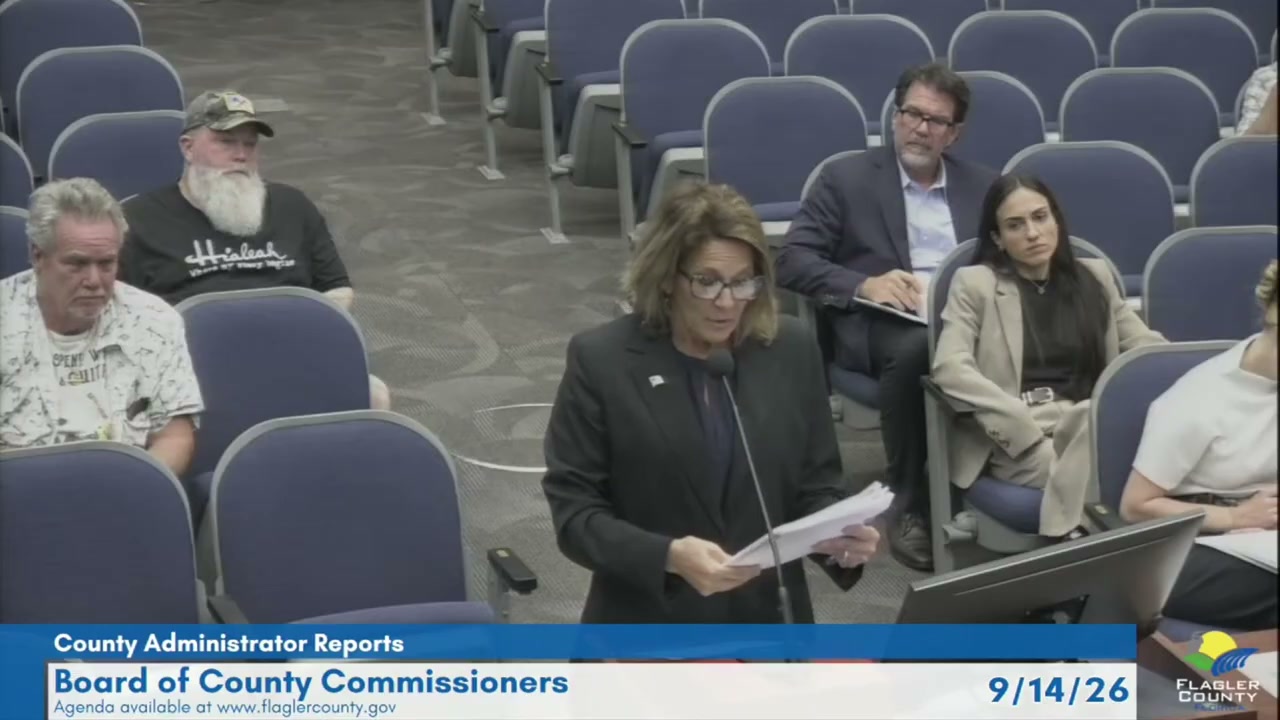
A speaker argued that campaign contributions from ICI Homes/MPC Lots to Commissioners Hansen and Pennington constitute a conflict of interest, alleging that allowing campaign signs and accepting donations from the developer creates an improper relationship.
The project was described as incompatible with the surrounding single-family community, likely to cause flooding on wetlands, and resulting in multi-story apartments overlooking Grand Landings homes.
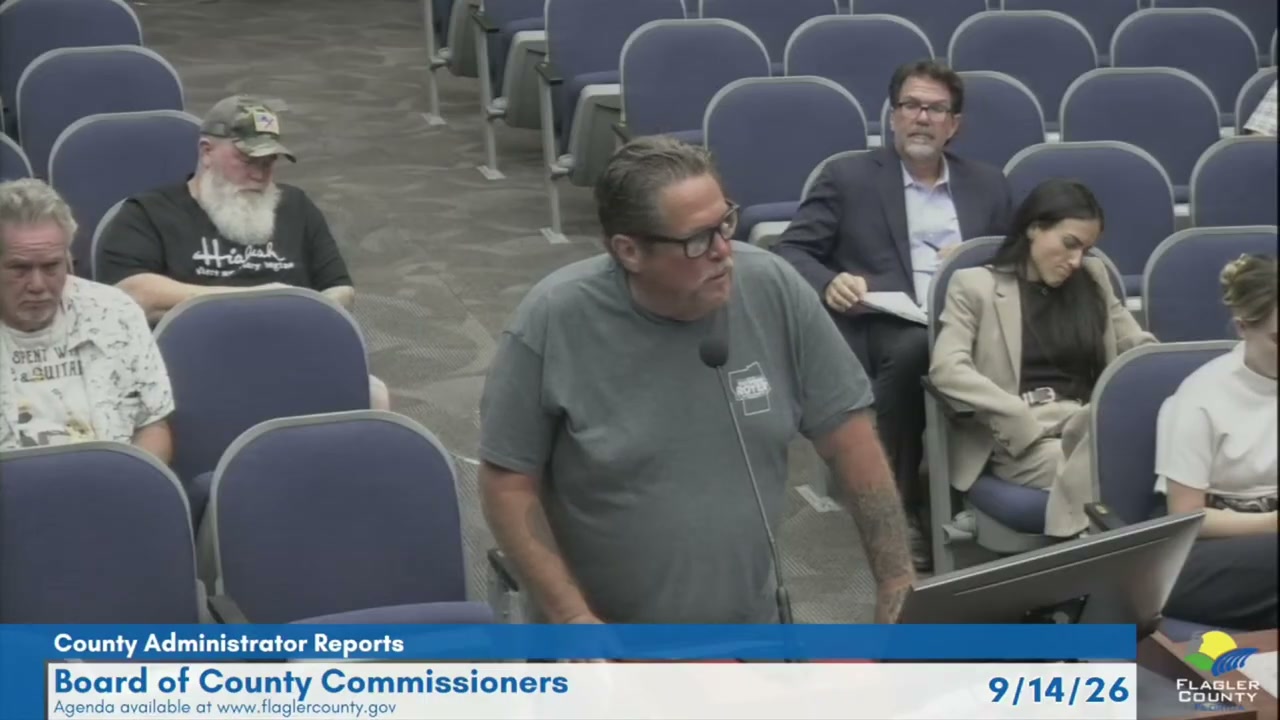
A speaker raised the conflict-of-interest argument regarding campaign contributions, stating that elected officials should disclose donor relationships during quasi-judicial proceedings and suggesting that those who took money from the developer and did not return it should abstain from voting.
A speaker displayed the site plan to show the small pond and thin tree line between nearby homes and the development footprint, arguing the developer has told residents they 'may never build.' The PUD was characterized as an indefinite entitlement with no binding commitments, and the arrangement was called 'spot zoning' that is illegal and incompatible with the surrounding community.
Tourism Director Amy Lucasic briefly explained that this ordinance authorizes the temporary reallocation of approximately $880,000 from the Tourist Development Tax capital projects category to the beach renourishment fund for FY2026-27, as has been done in prior years to fund the county's share of the beach management plan.
Commissioner Dance moved to approve and Commissioner Hansen seconded; no public comment was received and the item passed unanimously.
Interim County Administrator Adam Mingle asked commissioners to begin thinking about legislative priorities for the 2027 session, noting the Florida Senate would convene November 17 for officer selection, committee work would begin as early as November 30, and the session itself runs March 2 through April 30.
He stated he had already contacted the county's lobbyist for information on leadership priorities and anticipated scheduling a local legislative delegation meeting in mid-December, with the board's own legislative priority-setting process to follow the established pattern of two workshops and a regular meeting.
Two members of the public addressed the board.
One speaker urged the board to increase public notification requirements beyond the current 300-foot radius, arguing that all residents within an HOA community should receive direct notice when a project could affect their homes, not just the common-area property manager.
Another speaker suggested exploring a dedicated sales tax for beach renourishment so that all visitors and new residents share the cost.
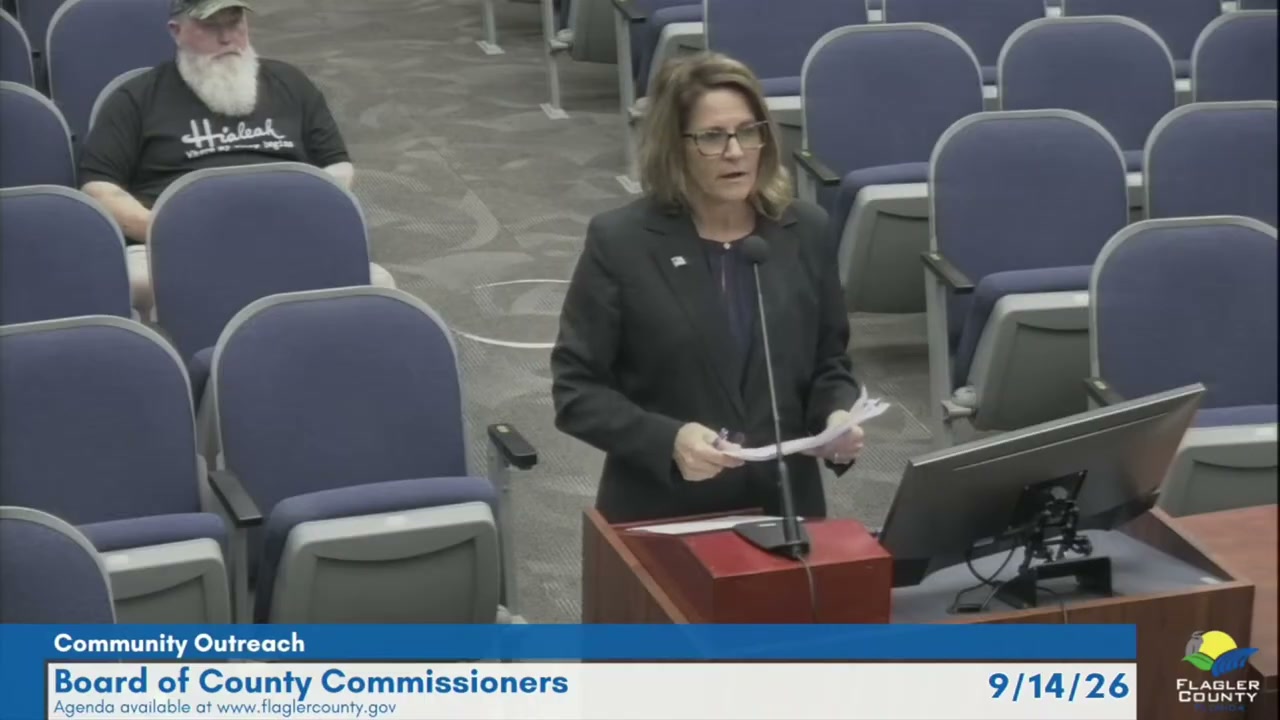
A speaker urged the board to increase the public notification radius for land use applications beyond 300 feet — suggesting at least 1,000 feet — and to require that all individual homeowners within an HOA receive direct notice rather than relying on property managers to pass information along, arguing the current system leaves many affected residents unaware of proceedings.
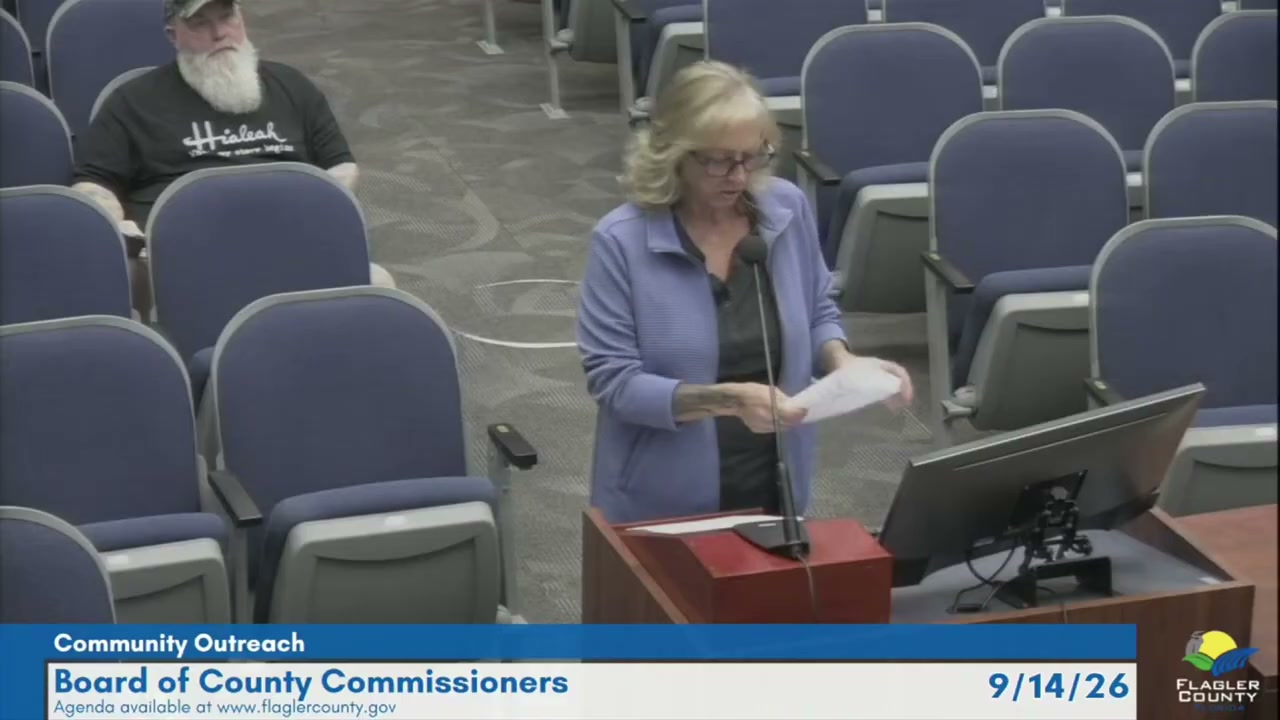
A speaker suggested the board explore placing beach renourishment funding on a sales tax ballot measure so that all visitors and residents — including the thousands attending events like the PGA tournament — contribute to that cost, noting that Fund 1311 (half-cent discretionary sales tax) currently has $8 million in it.
Commissioner Richardson had no comments.
Commissioner Hansen reported a successful town hall at MHCA with about 100 attendees.
Commissioner Carney announced her upcoming town hall on Wednesday in Flagler Beach at 5:30 p.m. and then delivered a pointed plea to colleagues and staff to reform the meeting structure, advocating for time-certain scheduling of quasi-judicial items, alternating workshop and regular meeting days, or restricting land use hearings to daytime sessions — all aimed at preventing another meeting running past 11 p.m.
The administrator acknowledged the concern, explained current scheduling constraints and the historical reasons for evening land-use meetings, and committed to working with commissioners on solutions.
Commissioner Dance inquired about the possibility of a moratorium on cell tower applications until the LDC criteria are updated, and was advised by legal counsel to discuss it offline rather than on the record given the just-concluded quasi-judicial proceeding.