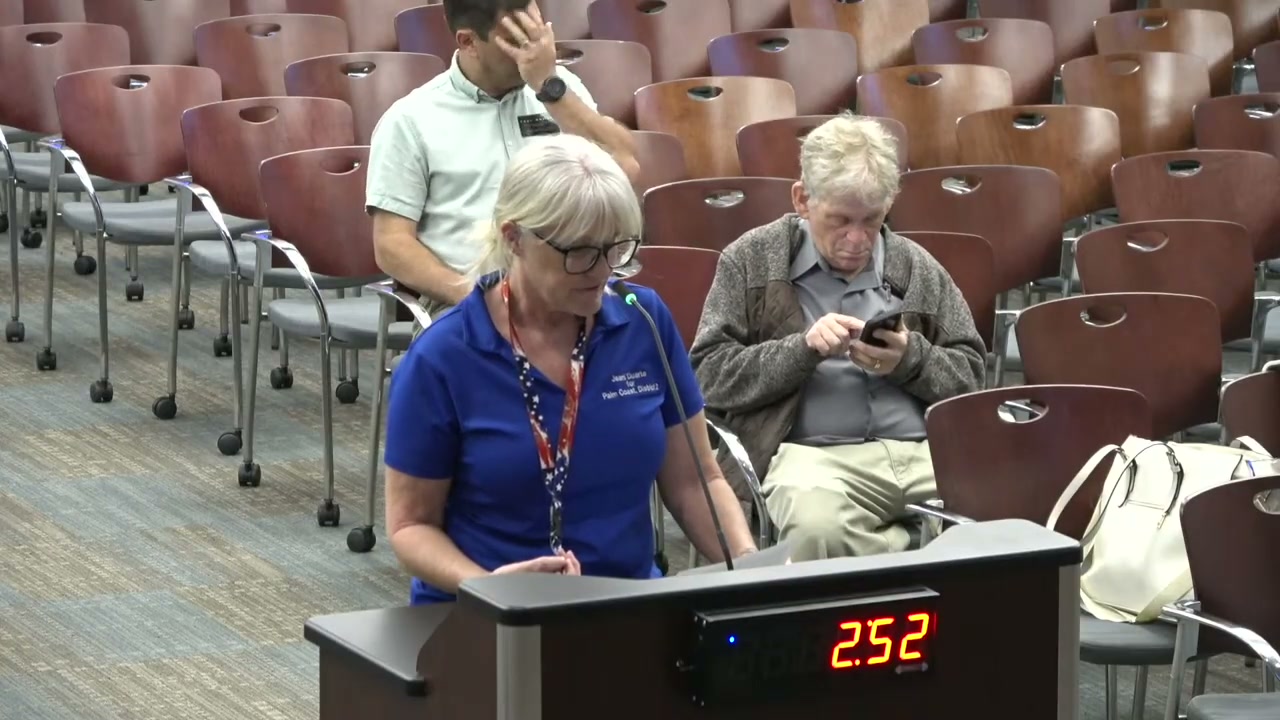
Speaker raised concerns about an alleged undisclosed city water pilot program, argued the city charter requires charter review only in 2028 and not before, questioned the legality of an appointed council seat remaining unfilled by election, and asked council to table all charter amendments until the proper review cycle.
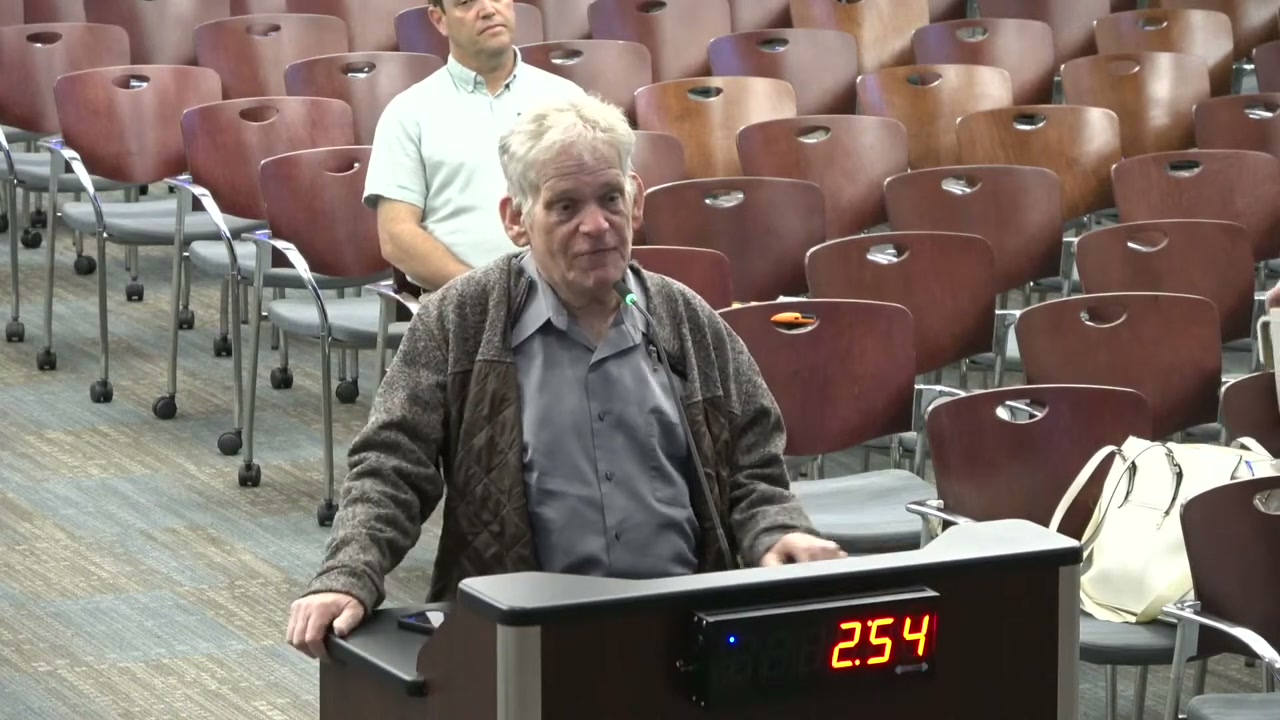
Speaker expressed concern about political text messages he described as attacking the mayor, praised the mayor's record of awards and service, and called for the behavior to stop.
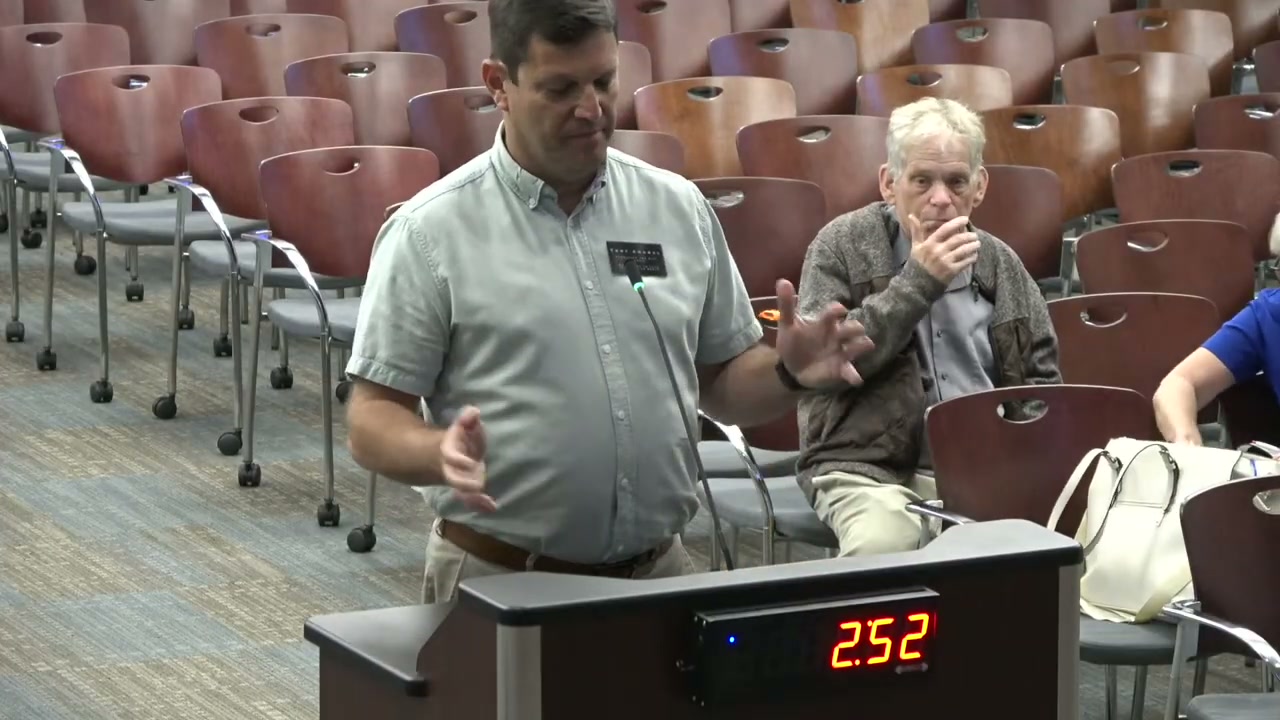
Speaker raised concerns about three recent agenda items: a $105,000 CRA survey that was redirected, a $250,000 firehouse museum design contract funded from parks and rec impact fees, and a $236,000 artificial turf replacement at Wadsworth Park, questioning whether spending commitments were being made without adequate funding certainty for follow-through construction.
Brandon Savage of Brown & Brown presented an overview of the city's self-funded health insurance plan, covering administrative fees, stop-loss coverage (individual threshold of $175,000), current plan year performance at 89% of budget, and large claimant activity.
For FY27, he projected a 3.8% increase and proposed adding a third HMO plan option using the Blue Care network, with a staff recommendation to close the PPO to new enrollees while allowing currently enrolled members to remain on it.
Three council members expressed support for the staff recommendation; Council Member Sullivan opposed transitioning away from the PPO but agreed with adding the HMO as an option.
Brian Branham of My Health Onsite presented on the organization's nearly 20-year track record operating employee health and wellness centers in Florida, including a 15-year relationship with Flagler County.
He described a full range of services including primary care, chronic disease management, labs, prescription dispensing, and occupational health services, and outlined cost projections showing approximately $490,000 in net annual savings for the city based on 85% utilization and 32 provider hours per week.
Council expressed interest but directed staff to gather more information on a potential partnership with the county's existing facility, survey city employees, compare costs against current MediQuik and LifeScan contracts, and research why the city did not pursue a similar arrangement previously before returning with a recommendation.
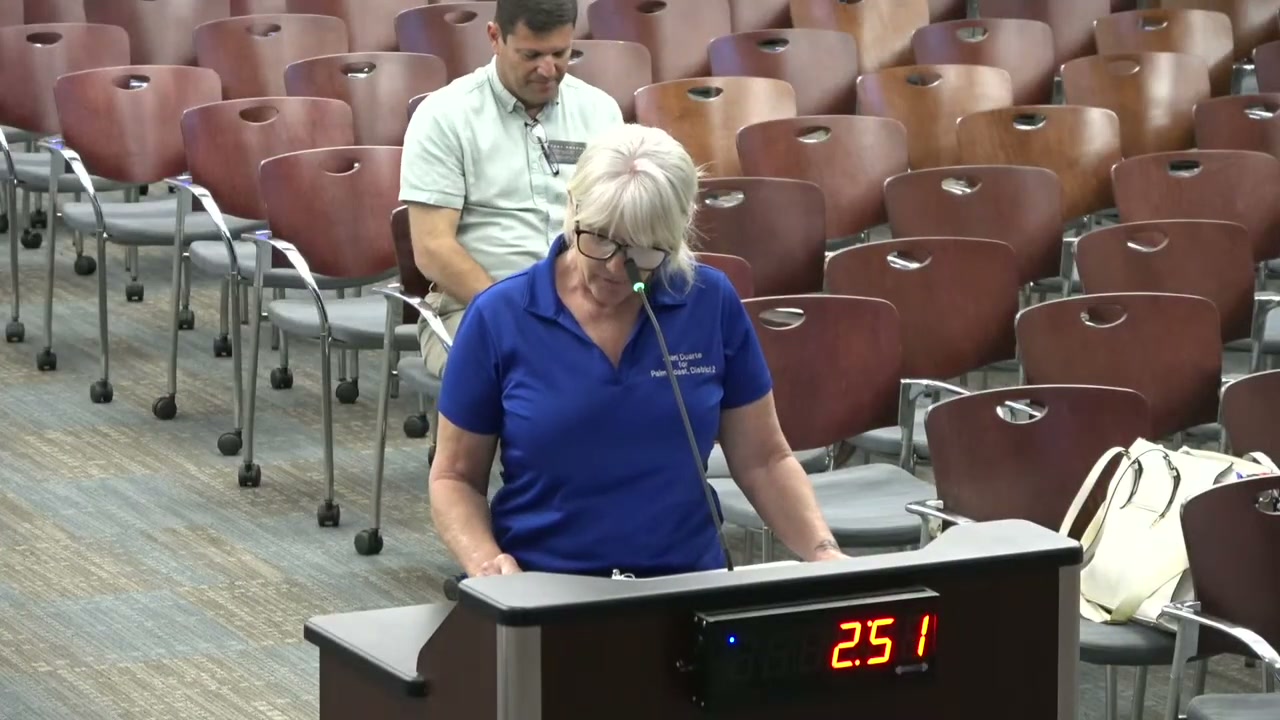
Speaker questioned whether a 32-hour-per-week provider arrangement at a shared facility would justify a dedicated location that only benefits city employees, expressing skepticism about the cost-benefit of the proposed health clinic arrangement.
Senior Contracts Procurement Coordinator Natalie Garcia and Public Works Director Matt Mansell presented proposed updates to the city's procurement policy ordinance, last revised in 2021, arguing that inflation has pushed more routine purchases into higher procedural thresholds.
Proposed changes include raising the small purchase threshold, increasing the city manager's unilateral approval authority to $100,000, and streamlining the competitive quote process.
Council expressed general support but directed that city manager approvals in the $50,000–$100,000 range be reported monthly alongside existing sole-source disclosures, that approving individuals be clearly named in those reports, and that the ordinance specify a chain of delegation when a director is unavailable.
First and second readings were scheduled for April 7 and April 14, 2026.
Speaker argued that the proposed procurement ordinance increases administrative spending authority in ways that reduce the number of financial decisions made in public meetings, expand exemptions from competitive bidding in areas such as technology and legal services, and introduce procedures for unsolicited public-private partnership proposals, raising concern about whether these changes honor the charter's fiscal safeguards.
Speaker said he did not support increasing procurement thresholds without first auditing how the existing authority has been exercised, and echoed the prior speaker's concerns.
Planning Manager Fong and Senior Planner Estelle Lands presented the current Land Development Code regulations for duplex zoning, drop lots, and the land use administrator role — noting this was a status-quo briefing rather than a proposal, with options deferred pending an affordable housing study expected in approximately two weeks.
Council learned there are over 1,000 duplex-zoned lots in the city, with 219 vacant drop lots (mostly Type A and B).
Council directed staff to return with options including splitting existing duplex lots into two detached single-family residences, to explore alternatives to the condominium ownership option, and to remove or simplify that option when the LDC amendments come back alongside the affordable housing study results, tentatively in May or June.
Speaker noted that in Nassau County, 1,400–1,500 square foot homes on very small zero-lot-line lots are selling for $358,000, arguing that reducing lot sizes does not necessarily reduce home prices and expressing concern about increased density.
Speaker argued that the condominium ownership model for split duplex lots creates impractical administrative burdens including HOA requirements, shared roof ownership disputes, and cross-utility complications, and suggested that for investment ownership duplexes are unlikely to result in stable homeownership.
Speaker, identifying himself as someone who has built duplexes throughout the state, cautioned the council that splitting duplex lots raises significant fire code concerns about fire wall requirements between units and urged that life safety standards be clearly addressed in any ordinance change.
Speaker identified himself as the originator of the duplex lot splitting proposal, clarified the concept including utility separation and cost projections in the $250,000–$290,000 range for 1,100 square foot homes, and expressed appreciation that the council was still considering the idea despite the extended timeline.
Planning staff presented proposed amendments to Chapter 7 Concurrency Management, described largely as housekeeping to align the LDC with current Florida Statute language, including changing 'proportionate fair share' to 'proportionate share,' updating section references, and clarifying that traffic impact analysis and traffic impact study are synonymous.
Vice Mayor Pontieri moved to remove the hospital exemption from concurrency requirements, which received council consensus.
Council also directed staff to remove the concurrency deferral option (Section 7.04.03), clarify the language in Section 7.07.03 to better distinguish between subsections A and B for proportionate share contributions, and add inflationary adjustment language to Section 7.07.06 to protect the city against dollar erosion over multi-year build-out periods.
Development Manager Dennis Leips and colleagues presented proposed amendments to Chapter 9 Engineering Design and Utilities, covering general provisions, platting, stormwater management, discharge and pollution control, land modification on platted lots, utilities, and outdoor lighting — primarily updating manual references and clarifying existing language.
Vice Mayor Pontieri raised questions about pedestrian path easement standards, city maintenance responsibilities, the deletion of language from Section 9.02.04 related to SB 180, the performance surety options including letters of credit, reclaimed water line requirements, and stormwater design thresholds.
Council directed staff to add reference language for pedestrian path standards, consider specifying 'irrevocable letter of credit' for greater enforceability, and add a note to monitor for potential changes to SB 180.
Speaker asked for clarification that Chapter 9 engineering and utilities changes apply only to new developments and do not affect existing platted lots.
Environmental Planner Dylan Rodriguez presented proposed amendments to Chapter 10 Environmental and Cultural Resource Protection, covering wetlands, floodplain management, well-field protection, endangered species, and cultural resources.
Changes include clarifying wetland delineation acceptance periods, establishing silt fence placement standards, adding procedures for unpermitted wetland impacts, setting standards for accessory structures in floodplains, and updating species study requirements.
Vice Mayor Pontieri directed staff to change 'may' to 'shall' for floodplain violation notices, add language precluding new habitable space in designated flood hazard areas in anticipation of potential ADU preemption by the state, and explore whether industrial uses should be further restricted within the city's 500-foot well-field buffer.
Council also discussed whether the well-field buffer could be expanded beyond its current 500-foot standard that already exceeds state statute.
Speaker asked for clarification about which specific flood zones would be affected by the proposed restriction on habitable space, noting that most of Palm Coast is in flood zone X, which is technically a flood zone but carries low probability, and requested that any restriction be tied to specific flood zone designations rather than a blanket reference.
Senior Planner Estelle Lands presented proposed amendments to Chapter 12 Signs and Advertising, including raising the maximum sign height in non-residential districts from seven to ten feet, extending the temporary commercial sign period from 30 to 60 days, and introducing a comprehensive digital signage framework.
Proposed digital sign regulations would allow signs only on certain roadway classes, limit the digital display to 50–75% of sign face depending on road classification, require a minimum eight-second hold time, mandate automatic dimming to 0.3 foot candles above ambient light, and require pixel spacing no greater than 10 millimeters.
Council expressed general support with conditions: increasing the residential setback from 150 to 300 feet, adding language to prevent out-parcels from each having their own digital monument sign, and ensuring obscenity exceptions are referenced in the content-neutrality section.
The ordinance is scheduled for the planning board on April 15 and a council workshop tentatively on May 12.
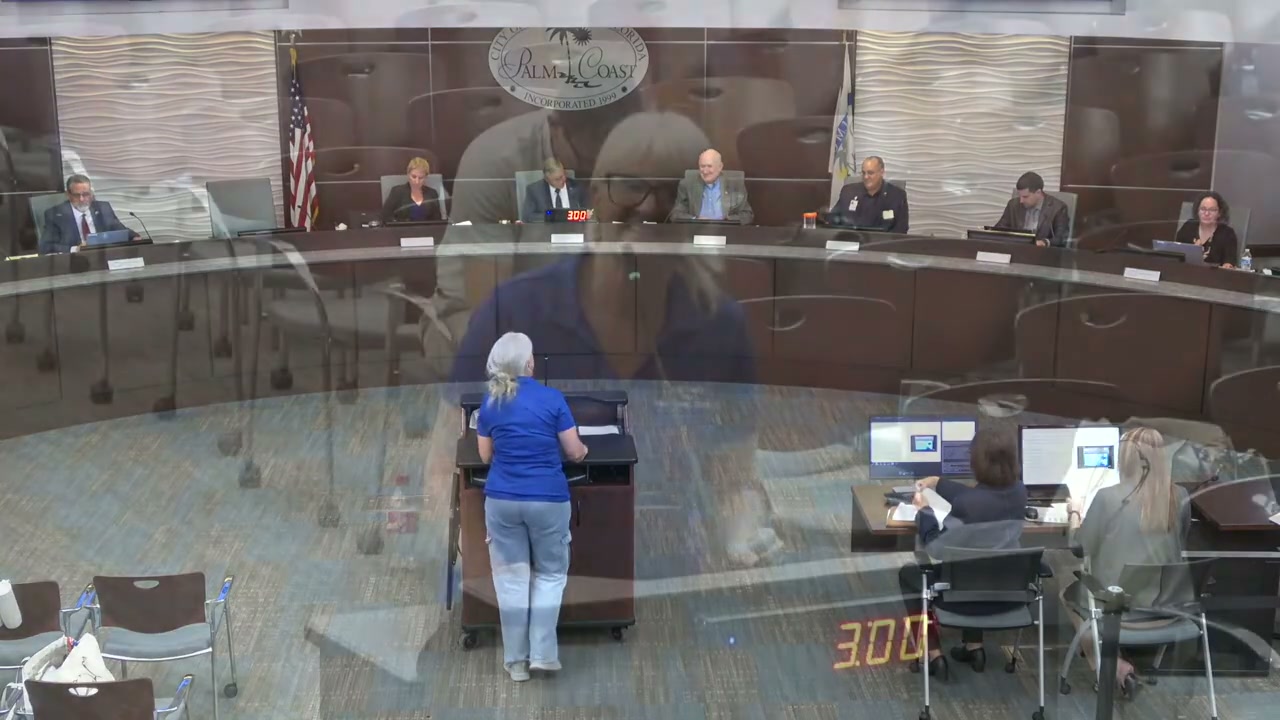
Speaker noted that businesses along the interstate are largely not visible from the highway due to the 10-foot sign height limit, suggesting this limits stop-and-go revenue from travelers, and asked whether sign heights along the interstate corridor could be increased to attract motorists.
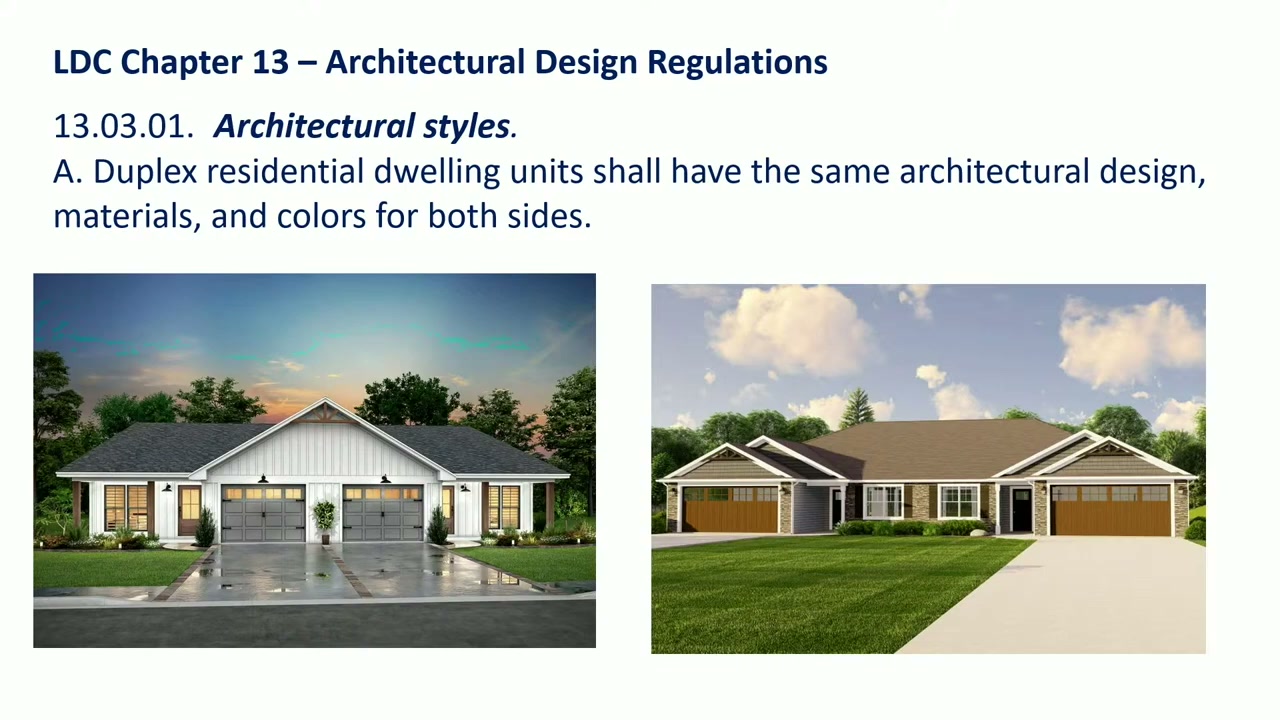
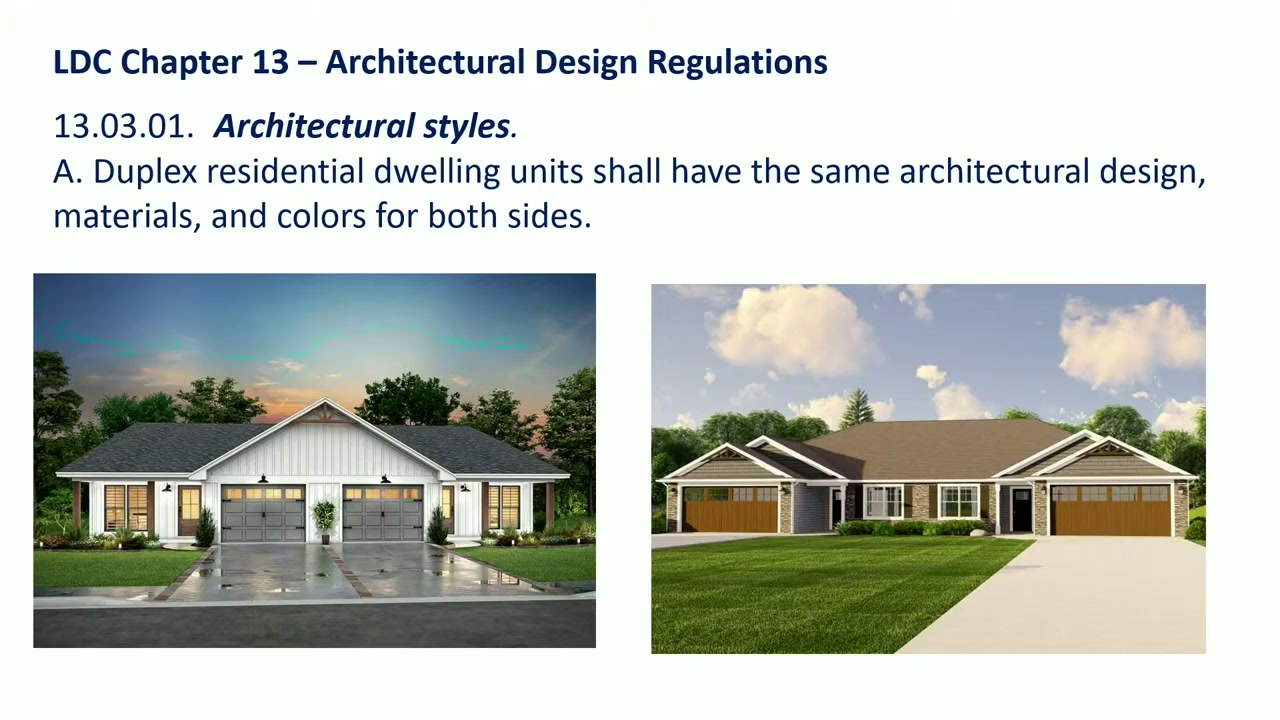
Landscape Architect Richard Picateggi and Senior Planner Estelle Lands presented proposed amendments to Chapter 13 Architectural Design Regulations, including clarified measurement standards for building relief, updated roofing materials provisions, added industrial architectural standards, and adjusted parapet height allowances.
Council raised questions about the coastal building visual relief standard and whether it was enforceable given existing noncompliant homes, the use of subjective terms like 'compatible' in exterior color requirements, the LRV references in the exterior colors section, the prohibition on certain window signs that could inadvertently ban standard open/closed signs, and the screening requirements for mechanical equipment in tight side-yard situations.
Staff agreed to revisit the coastal visual relief provision, refine color language, clarify the window sign prohibition, and re-examine screening requirements particularly for air conditioning units near drainage easements.
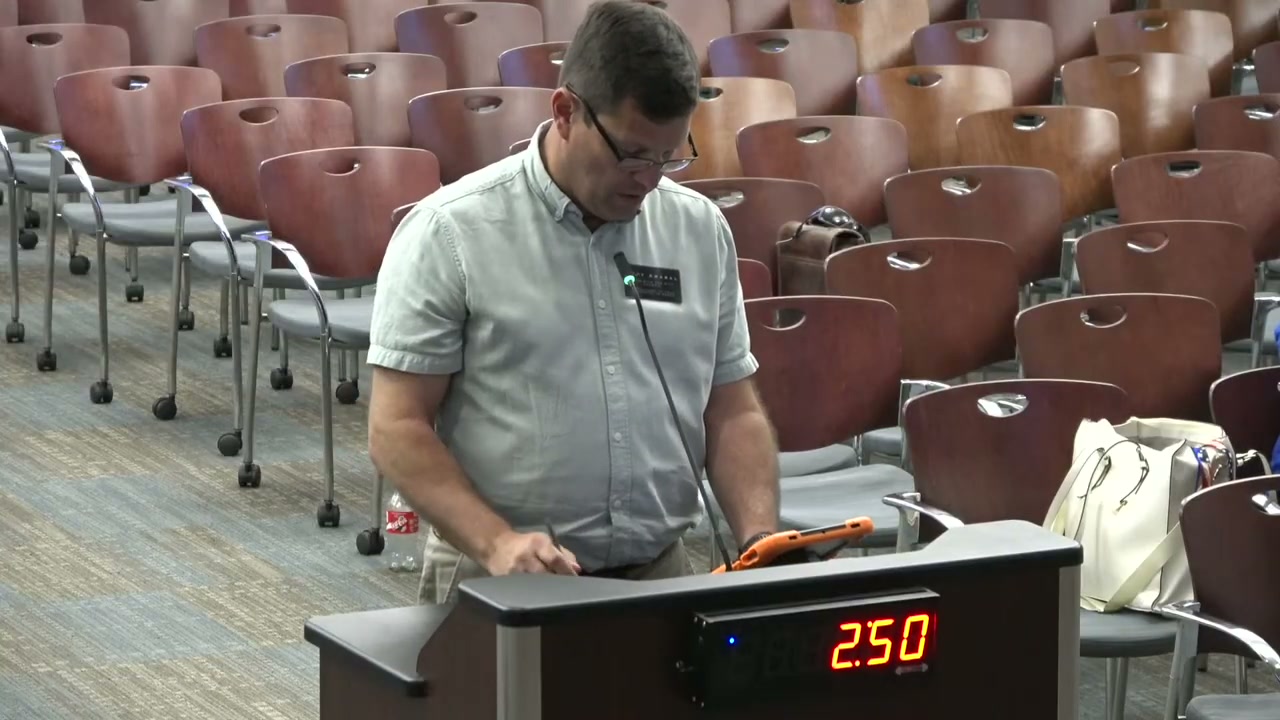
Speaker raised several concerns about Chapter 13 amendments: the coastal building visual relief standard in Section 13.02.03 could restrict lot widths for residential properties along the intercoastal without prior enforcement; LRV references remain in Section 13.02.06 contrary to prior council direction; Section 13.03.04 requiring mechanical equipment screening may impede airflow to air conditioners and block drainage in narrow lots; and Section 13.05.07 requiring industrial properties to screen mechanical equipment, loading docks, and storage from adjacent industrial neighbors goes beyond what buffers already address.
Speaker referenced Flagler County's elevated rates of water-related diseases including Legionnaires disease and E. coli, cited an undisclosed pilot program, and asked whether employees would be reimbursed or whether state programs could offset health costs related to water quality.