Animal Control: How We Got Here
Flagler County and the City of Palm Coast both pay the Flagler Humane Society for its services. The county’s money covers animal control. For more than two years, the officials who approve that money have been asking it for answers.
This is how we got here.
Nov. 9, a county workshop: Caroline Johnson at the public microphone. She directs SMART Animal Rescue, and her group comes back into this story.
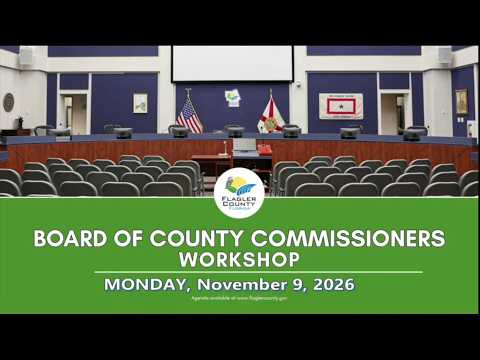
Caroline Johnson, SMART Animal Rescue, during public comment. Nov. 9, 2026 · County Commission workshop
A week earlier, the shelter’s executive director, Amy Carotenuto, had told commissioners this.
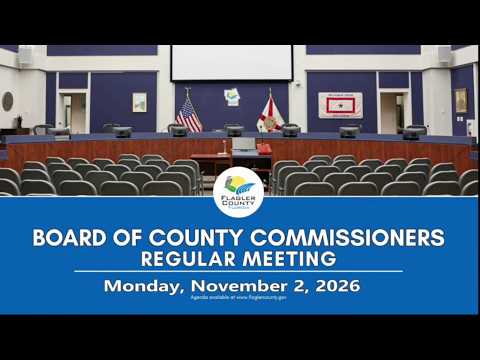
Amy Carotenuto, executive director, Flagler Humane Society. Nov. 2, 2026 · County Commission
Complaints are where this started. In August of 2024, speakers brought them to the County Commission and the City Council. Both boards asked for a seat at the Humane Society’s board table.
In April of 2025, the two boards met together, and the Humane Society’s board president, Linda Lester, gave them her answer. What follows stays polite, but it turns sharp. As the boards work through it, an alternative begins to take shape, a shelter of their own.
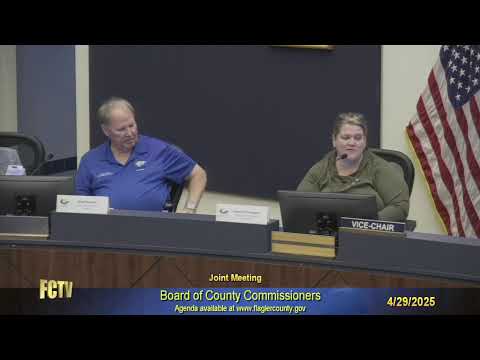
Linda Lester, president of the Flagler Humane Society board; Vice Mayor Theresa Pontieri; Commissioners Andy Dance and Leann Pennington; Council Member Ty Miller. April 29, 2025 · Joint workshop
Lester said it is illegal for a government agency to ask who is married to whom. Yet IRS Form 990, which the Humane Society must file every year, asks whether any officer or director has a family or business relationship with another. On its most recent return, for the year ending Sept. 30, 2025, the Humane Society checked yes. Two months before that workshop, on Feb. 25, 2025, Palm Coast Mayor Mike Norris read the board list aloud at a council meeting and asked which members were married. He was told of two couples on a board of six. (The Humane Society’s posted returns.)
The CIP they are talking about is a capital improvement plan: money set aside, year by year, to build. From there, the idea took hold, and the two governments began moving toward it. A city and county task force studied a second shelter. In January, both boards agreed it should be run by a nonprofit. In August, the City Council agreed to offer city land on U.S. 1 for that shelter, with SMART Animal Rescue lined up to run it, the only group that answered the call. That is Caroline Johnson’s group, the voice that opens this story.
Pontieri was also Palm Coast’s liaison to the Humane Society. Aug. 26.
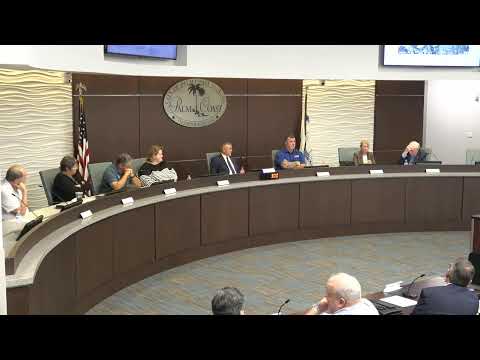
Vice Mayor Theresa Pontieri, city liaison to the Humane Society. Aug. 26, 2026 · Joint workshop at City Hall
Full transparency is where the next fight begins. In 2025, the Humane Society asked a University of Florida shelter program to review its operations. The report, dated October 2025, was written for the shelter’s leaders and its board. Pontieri says the city asked for a copy and did not get one. By Oct. 20, she had read it.
Vice Mayor Theresa Pontieri. Oct. 20, 2026 · Palm Coast City Council
Miller followed her.
Council Member Ty Miller. Oct. 20, 2026 · Palm Coast City Council
The Humane Society has since posted the full report on its website, with its answer after each recommendation. It says the average dog now stays 37 days, down from 81. When the report was written, the shelter held about 200 animals, and the report says that many animals need 17 animal-care staff.
On Nov. 2, commissioners asked whether the Humane Society would accept the county’s contract terms.
Amy Carotenuto, Commissioner Andy Dance and the County Commission. Nov. 2, 2026 · County Commission
The money. Last year’s county contract had a ceiling of $320,599, raised by amendment to $352,658.90. On Sept. 28, the Humane Society’s director and the county’s acting administrator signed an extension with a new rate list, to apply once a new contract was signed: $300 for each impounded animal, up from $156; $85 to spay or neuter, up from $25; $500 or $750 for a quarantine or rabies test, depending on the animal’s weight, up from $400; $150 for impounded wildlife or livestock, up from $75. (County agenda packet, Nov. 16, 2026, pages 354 to 370.)
A week later, commissioners held a workshop on the contract. The Humane Society had sent its own draft. It treated five animals from one place as an extraordinary case, and it asked the county to stand behind it when it turned work away. Staff said the county cannot make that promise to a private group. Commissioners and the county attorney went back and forth over how little say the county has over a group it pays. They settled on one more year, with oversight written in.
On Nov. 16, the board voted 5-0: $350,000 for one year, through Sept. 30, 2027. Either side can end it on 90 days’ notice. Pontieri, a commissioner-elect, spoke from the public microphone. She asked the board to strike section 12E, which let the Humane Society decide which of its records are not public, and to add an audit and a six-month term. Commissioners were told the county can already check its own money through the records. The board kept the one-year term and rewrote section 12E so that it now points to the state’s public records law, Chapter 119.
Much is still up in the air. The new contract guarantees only what state law requires: dangerous-dog cases, neglect cases, rabies quarantines, and shelter for the animals of people taken to jail. Strays and other calls now depend on the money, and the Humane Society decides which ones it takes. There is no patrol schedule and no duty to respond when 25 or more animals come from one place. County staff wrote that “further service level cuts are likely” next year. And no one has said who should do animal control after this contract ends.
Here is where the story turns. Animal control and an animal shelter are two different jobs. Animal control is a job the law gives to government. Its officers carry a badge from the county. They investigate dangerous dogs and neglect, and they build the cases the county attorney takes to court. A shelter is where the animals go. It feeds them, treats them and finds them homes. In Flagler County, the Humane Society does both jobs. Its animal control officers are its own employees, appointed by the County Commission. That makes a private charity the keeper of a public duty paid for with tax money. A local humane society answers to its own board, and that board does not answer to the county.
So who else could carry the badge? On Nov. 9, commissioners asked Sheriff Rick Staly whether his office could take it over.
Sheriff Rick Staly. Nov. 9, 2026 · County Commission workshop
Later, Chair Leann Pennington asked whether a smaller shelter of the county’s own could work with the sheriff.
Chair Leann Pennington and Sheriff Rick Staly. Nov. 9, 2026 · County Commission workshop
The sheriff said counties like this one spend about $5 million a year on animal control. When the contract came up for its vote a week later, Commissioner Kim Carney.
Commissioner Kim Carney, with county staff on the budget. Nov. 16, 2026 · County Commission
The Humane Society says it has never turned away an animal in need, answers calls day and night, and saves 93 to 94 percent of the animals that come through its doors. The officials say they pay for animal control and cannot see inside it.
What comes next: Palm Coast has its own contract with the Humane Society. The City Council has it on the calendar for a Dec. 8 workshop, along with the city’s animal control code, and for a vote on Dec. 15. The County Commission has asked for a joint meeting with the new City Council; no date has been set. Theresa Pontieri now sits on the County Commission, and Ty Miller is Palm Coast’s vice mayor. The county contract runs until next September. The meetings ahead are about how animal control gets done and who pays for it, and the boards seated now will decide.
I’m Johnny Diamond of Palm Coast Storylines. Thank you for reading, listening to, and watching our stuff.
The full record: The Two-Year Drama. The name: The Humane Society: It’s Just a Name.