Westward Expansion: The Origin Story
The most interesting dynamic about the origin story of Westward Expansion in relation to where it sits right now is that both occurred during election season — and it has been the hottest item in both.
It’s August 27, 2024.
For the past year in the City it has been all about the comp plan, branded as “Imagine 2050”. The effort was titanic. There were open houses. Pop-up events. Workshops, one after another, spread out over months. Surveys and feedback forms, a website built just for the effort.
Tens of thousands of residents, visitors, and local businesses weighed in, according to the city’s own count.
Staff and elected officials talked about it constantly — in newsroom releases, in meetings, at events — framing it as something the whole community was building together, not something being done to them.
It would go on to win a statewide award for exactly that kind of public involvement.
There were balloons.
We were in the middle of an election, as we are now, and a dark veil of suspicion weaved through the body politic that “Imagine 2050” was nothing more than a scam to push Westward Expansion.
Maybe it was.
The began their transition to an MPD that day, at a meeting during which the city council deliberated over passing the comp plan to the state, moving it along the prescribed path.
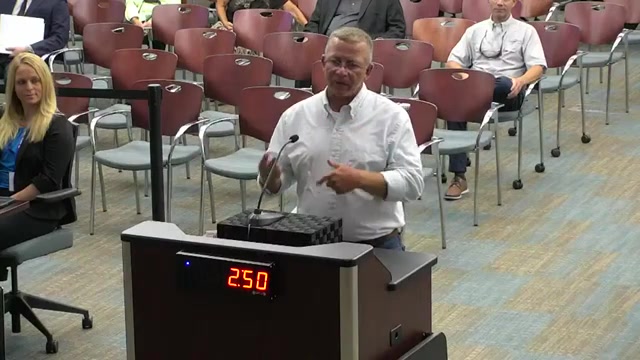
Then mayoral candidate Mike Norris stepped to the mic to articulate what was the majority view in his circle — a view that arguably was the majority view city-wide, given his 63% victory over the incumbent mayor, David Alfin.
Alfin was trounced so soundly he didn’t even make the runoff — eliminated outright in the August primary, last place out of five candidates.
Something that rarely happens in electoral politics.
The whole board got wiped out.
Klufas was term-limited off the city council and attempted to win a seat on the county commission instead — defeated.
Danko left the council to run for a different county commission seat rather than seek re-election to his own. He correctly read the room, heard the grumbling.
Council Member Heighter resigned that same August.
Every member of the prior council either lost their seat, lost the seat they moved to, or resigned, in the same cycle. Pontieri is the only one still standing.
Norris stepped to the mic after 20 minutes of torrid back and forth between then-councilwoman Theresa Pontieri, Mayor Alfin and Senior Planner Ray Tyner as two 15-year-old DRIs transitioned to an MPD, and said plainly, “We know it’s all about the money and making it available for the developers to build what they want on the west side.”

For staff, it was easy. Change a couple letters in the docs, some colors on the map and you’re good to go.
It was the position of Pontieri that the whole scheme was illegal.
Alfin asked her, “So it’s a legal problem, or it’s not — it’s different than what has been done in the past — or are you saying it’s illegal?”
“No, I’m saying that per our policies and our code, it’s illegal,” Pontieri fired back.
She took a subtle dig that landed sharply at the notion that the change had anything at all to do with city policy or lofty goals, as Tyner struggled to rationalize the sweeping changes: “…let’s not call it something it’s not. I mean, this is an idea of the landowner, because this is what they do…”
She didn’t stop at the council being cut out — she drew a straight line from that to the public being cut out too, and called it what it was: “…without coming before Council and making sure that it’s okay that we go through the right process to get there, and without giving the public the ability to talk about it, because nobody knows what is going on in this… This is not transparent…”
For Pontieri, it wasn’t about strict adherence to the law, it was about fairness and making sure the public had their say.
“…I have a really big issue with making every other landowner go through a process that we’re not making this one go through.
That is not right.
We have got to be fair to everybody, and this is not fair what we’re doing… we are giving them an improper leg up.”
— Councilwoman Theresa Pontieri · August 27, 2024But Pontieri did not prevail.
Where were Klufas and Danko in all this? Watching. One wonders how different things would be now had Pontieri prevailed and the public had the opportunity to flood the meetings then as is happening now.
One could fairly argue that the whole scheme could have been nipped in the bud, way back then, but for the actions of Danko and Klufas.
It doesn’t matter, though. They’re gone.
So bring it back to today. Today’s election vibe through the lens of two years of sharp elbows on the dais and at the mic.
What would have happened if no one had bothered to read the source documents, and staff had quietly shepherded the documents and maps to the state?
Was it all a scam?
Maybe it was.
DRI / MPD… What’s the diff?
Read about it here.